

Why Headwear Matters in NZ: 40% Higher UV Protection
New Zealand’s unique position beneath a thinning ozone layer means UV radiation is up to 40% stronger than the global average, making headwear essential protection, not just a fashion statement. Beyond sun defense, headwear carries deep cultural significance rooted in Maori tradition while meeting the demands of variable weather and active Kiwi lifestyles. This guide explores how cultural heritage, climate realities, and modern style converge to shape smart headwear choices that balance protection, identity, and fashion.
Table of Contents
- The Intersection of Culture, Climate, and Fashion
- Maori Traditional Significance and Cultural Identity
- Functionality: Climate Adaptation and Protection
- Common Misconceptions About Headwear Functionality
- Popular Styles and Practical Applications
- Quality and Craftsmanship Considerations
- Conclusion: Making Informed Headwear Choices for Style and Protection in New Zealand
- Explore Quality Headwear Tailored for New Zealand
- Frequently Asked Questions
Key Takeaways
| Point | Details |
|---|---|
| UV Protection | New Zealand’s intense UV demands UPF-rated fabrics and wide brims for effective sun defense. |
| Cultural Identity | Maori headwear symbolizes status, mana, and heritage, influencing contemporary Kiwi style. |
| Climate Adaptation | Variable weather requires water-resistant, breathable materials for comfort across activities. |
| Quality Matters | Durable craftsmanship and sustainable materials ensure longevity and respect cultural traditions. |
| Myth Busting | Stylish hats protect effectively, lightweight materials outperform heavy ones for warmth. |
The Intersection of Culture, Climate, and Fashion
New Zealand’s environment creates unique demands for headwear that few other regions face. The country’s geographic isolation beneath a compromised ozone layer results in UV levels up to 40% stronger than most of the world, turning sun protection from optional to critical. Wind whipping across coastlines and sudden rain showers add layers of functional requirements that headwear must address.
Maori cultural heritage shapes how Kiwis view headwear beyond mere utility. Traditional Maori head coverings incorporated natural materials like flax, feathers, and animal skins, each element carrying symbolic weight tied to identity and social standing. This cultural foundation persists today, influencing design choices and the meaning people attach to what they wear on their heads.
Modern New Zealand lifestyles blend outdoor adventure with urban sophistication. A typical week might include coastal hikes, city commutes, sports activities, and cultural events. Headwear must transition seamlessly across these contexts while maintaining both protection and style.
Key environmental and cultural factors shaping headwear choices include:
- Intense UV radiation requiring UPF-rated fabrics and wide brims for adequate protection
- Unpredictable weather patterns demanding water-resistant, breathable materials
- Active outdoor culture necessitating secure, comfortable fits during physical activities
- Cultural respect for Maori traditions influencing design elements and material choices
- Urban fashion trends blending international styles with local sensibilities
Maori Traditional Significance and Cultural Identity
Maori headwear carries meaning that extends far beyond physical protection. Traditional head coverings served as visible markers of mana, the spiritual authority and prestige an individual held within their community. Materials chosen for headwear communicated specific messages about the wearer’s role, achievements, and connections.
Flax fibers formed the foundation of many traditional pieces, chosen for their availability and workability. Feathers from native birds added symbolic layers, with different species representing different qualities or affiliations. Animal skins provided warmth and durability while connecting wearers to the natural world through ancestral hunting traditions.
In Maori worldview, the head holds sacred significance as the most tapu part of the body, housing a person’s spiritual essence. Headwear thus became more than decoration or defense against elements. It represented a physical manifestation of spiritual protection and social identity. Contemporary Maori politicians and public figures continue using distinctive hats as cultural identity symbols, maintaining this tradition in modern contexts.
Modern applications of traditional significance:
- Public leaders wearing culturally significant headwear during formal ceremonies and events
- Artists incorporating traditional materials and techniques into contemporary hat designs
- Educational initiatives teaching younger generations about headwear symbolism and history
- Fashion designers respecting sacred elements while creating commercially available pieces
Pro Tip: When selecting headwear inspired by Maori design, research the cultural meanings behind specific patterns or materials. Supporting brands that collaborate with Maori artisans ensures authentic representation and fair compensation for cultural knowledge.
This cultural depth adds richness to how New Zealanders approach headwear craftsmanship, creating expectations for quality and meaning that purely functional designs cannot satisfy.
Functionality: Climate Adaptation and Protection
New Zealand’s climate presents a triple challenge: intense UV radiation, persistent wind, and sudden precipitation shifts. Headwear must address all three factors simultaneously to serve Kiwis effectively throughout their daily activities.
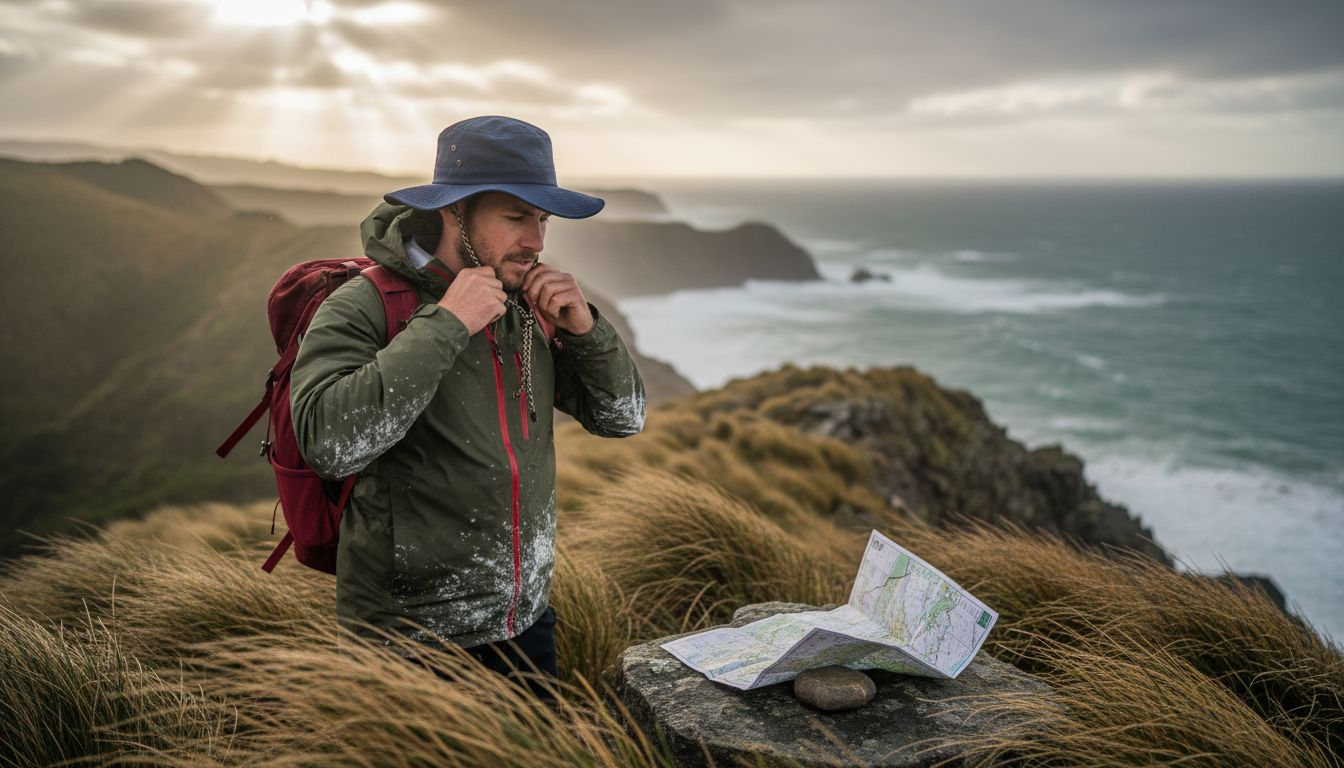
UV protection stands as the primary functional requirement. With radiation levels significantly exceeding global norms, headwear needs UPF-rated fabrics that block harmful rays rather than simply providing shade. Wide brims extend protection beyond the scalp to face, neck, and ears where skin cancer rates remain concerningly high among outdoor enthusiasts.
Wind resistance requires secure construction and strategic design. Coastal communities and high-altitude activities expose wearers to gusts that turn poorly designed hats into airborne hazards. Adjustable chin straps, snug fits, and aerodynamic profiles keep headwear functional when conditions intensify.
Water resistance addresses New Zealand’s unpredictable weather patterns. A clear morning can transition to drizzle within minutes, making waterproof or quick-drying materials essential. Breathability prevents internal moisture buildup from physical activity, maintaining comfort during extended wear.
Essential functional features for New Zealand conditions:
- UPF 50+ rated fabrics blocking at least 98% of UV radiation
- Wide brims measuring 7-10 cm for comprehensive facial and neck protection
- Water-resistant coatings or naturally hydrophobic materials like treated wool
- Moisture-wicking interior bands preventing sweat accumulation during activity
- Adjustable sizing systems accommodating different head shapes and hair volumes
- Ventilation panels balancing weather protection with temperature regulation
Pro Tip: For hiking and water sports, choose hats with dark underside brims. Light colored undersides reflect UV radiation upward onto your face, reducing the protection your hat provides.
These functional requirements align perfectly with stylish sports hats for Kiwis, proving protection and fashion need not conflict.
Common Misconceptions About Headwear Functionality
Several myths persist about headwear performance that lead New Zealanders toward poor purchasing decisions. Understanding the facts helps you invest in pieces that actually deliver the protection and comfort you need.
Myth one claims stylish hats cannot provide serious UV protection. Reality contradicts this completely. Modern UPF-rated fabrics integrate seamlessly into fashionable designs, offering protection exceeding 50 SPF while maintaining aesthetic appeal. A well-designed fedora or baseball cap with treated fabric protects more effectively than many purely functional sun hats lacking proper material treatment.
Myth two suggests heavier hats provide better warmth during cold weather. Weight correlates poorly with insulation efficiency. Lightweight merino wool beanies trap body heat effectively through air pockets in the fiber structure while remaining breathable enough to prevent overheating. Heavy hats often use dense materials that conduct heat away from your head or cause excessive sweating that leaves you colder once activity stops.
Myth three assumes all headwear suits all New Zealand weather equally. Regional climate variations demand different approaches. Auckland’s humid subtropical conditions require different materials than Queenstown’s alpine cold or Wellington’s persistent wind. A hat perfect for Northland summer becomes inadequate for South Island winter.
Debunking common headwear misconceptions:
- Fashion and function combine successfully through modern fabric technology and thoughtful design
- Lightweight materials often outperform heavy ones through superior moisture management and breathability
- Regional climate differences require tailored headwear choices rather than one universal solution
- Dark colored hats do not necessarily provide better UV protection than light colors when proper UPF fabrics are used
- Baseball caps protect effectively when designed with adequate brim width and rated fabrics
Pro Tip: Test breathability before purchasing winter headwear by holding the material against your mouth and breathing through it. If airflow feels completely blocked, the hat will likely cause overheating during any physical activity.
Popular Styles and Practical Applications
New Zealand’s headwear preferences reflect the balance between cultural influences, functional needs, and international fashion trends. Understanding how different styles serve specific purposes helps you build a versatile collection suited to your lifestyle.
Flat caps combine wind resistance with refined aesthetic appeal. Their close-fitting profile prevents displacement during gusty conditions while the short brim provides moderate sun protection. Originally working-class European headwear, flat caps now transition seamlessly from casual outings to smart-casual events, making them versatile urban choices.
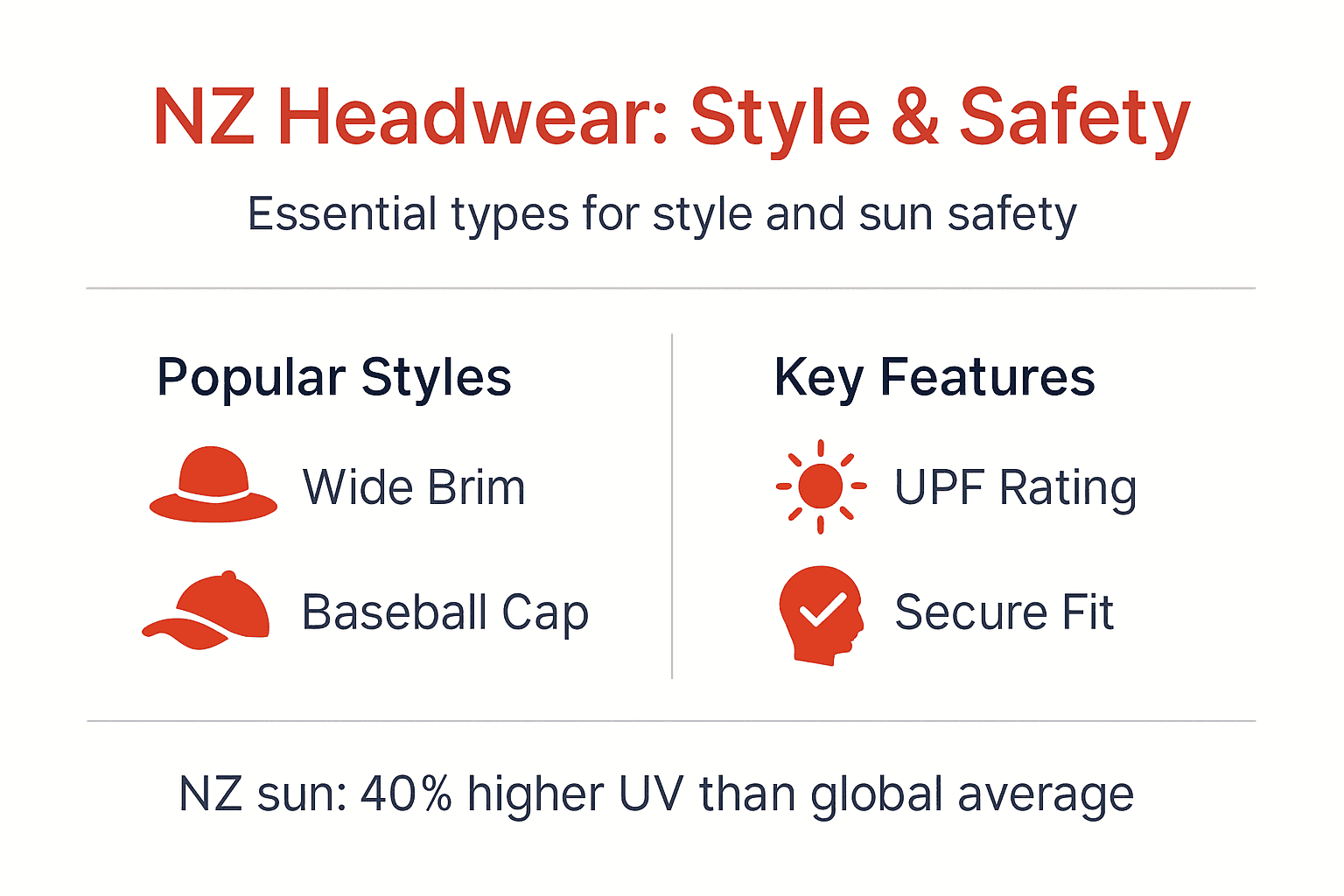
Baseball caps dominate casual and sports contexts through their practical design and customization potential. Quality versions feature UPF-rated fabrics and structured brims maintaining shape after repeated wear. The adjustable back accommodates different head sizes and hairstyles, while the curved brim shades eyes without obstructing peripheral vision during activities.
Wool beanies serve as cold weather essentials throughout New Zealand’s cooler regions. Merino wool provides exceptional warmth relative to weight while naturally resisting odor and managing moisture. Slouchy styles offer fashion flexibility, while close-fitting options work better under helmets during skiing or cycling.
| Style | Primary Function | Best Activities | Key Features | Seasonal Use |
|---|---|---|---|---|
| Flat Cap | Wind protection, style | Urban wear, casual outings | Close fit, moderate brim | Year-round |
| Baseball Cap | Sun protection, versatility | Sports, hiking, everyday | Adjustable, UPF fabric | Spring through autumn |
| Wool Beanie | Warmth, comfort | Cold weather activities | Breathable, moisture-wicking | Autumn through spring |
| Wide-Brim Hat | Maximum UV protection | Beach, gardening, fishing | 7-10 cm brim, chin strap | Summer primary |
| Bucket Hat | All-around protection | Outdoor adventures | 360-degree brim, packable | Year-round |
Style selection considerations:
- Urban professionals favor flat caps and fedoras blending with business casual attire
- Outdoor enthusiasts prioritize wide-brim hats and technical caps with performance fabrics
- Cultural events may call for traditional-inspired designs respecting Maori heritage elements
- Multi-activity days benefit from packable styles transitioning between contexts
Exploring types of headwear for everyday style reveals additional options beyond these core categories. Seasonal guides like best summer hats in New Zealand provide targeted recommendations for specific conditions.
Quality and Craftsmanship Considerations
Investing in well-crafted headwear pays dividends through longevity, performance, and satisfaction. Quality differences become apparent quickly when comparing budget options against premium pieces designed for New Zealand conditions.
Durable fabrics withstand repeated exposure to sun, wind, and moisture without degrading. Natural fibers like cotton, wool, and linen offer breathability and comfort but require proper treatment for water resistance. Synthetic blends can provide enhanced durability and easier maintenance while potentially sacrificing some breathability. The best options often combine materials strategically, using natural fibers where skin contact occurs and synthetics for exterior weather protection.
Local craftsmanship often delivers superior quality through attention to detail and understanding of regional needs. New Zealand-based manufacturers design specifically for local climate challenges rather than adapting international patterns. Supporting local production also reduces environmental impact through shorter supply chains and often ensures better labor conditions.
Sustainability increasingly influences purchasing decisions among environmentally conscious Kiwis. Ethically sourced materials, minimal waste production processes, and fair labor practices align with values many New Zealanders hold. Headwear lasting multiple years through quality construction proves more sustainable than frequently replacing cheaper alternatives.
Quality indicators when evaluating headwear:
- Reinforced stitching at stress points like brim attachments and band connections
- Consistent fabric density without thin spots or irregular weaving
- Colorfast dyes maintaining appearance after sun exposure and washing
- Proper sizing systems with adjustable elements accommodating minor variations
- Clear care instructions supporting long-term maintenance
- Warranty or guarantee backing manufacturer confidence in durability
Proper care extends hat life significantly. Store headwear on forms or hangers maintaining shape rather than crushing in drawers. Clean according to material requirements, typically involving gentle hand washing or spot cleaning rather than machine washing. Protect from extended direct sunlight when not worn, as UV degrades fabrics over time even when stored.
Learn more about quality matters in headwear craftsmanship and explore buckethats.co.nz alternatives for quality-focused options.
Conclusion: Making Informed Headwear Choices for Style and Protection in New Zealand
Selecting appropriate headwear for New Zealand living requires balancing multiple factors: cultural respect, climate adaptation, personal style, and quality investment. The country’s unique combination of intense UV radiation, variable weather, and rich Maori heritage creates requirements that generic international options rarely address adequately.
Successful headwear choices begin with understanding your specific needs based on regional climate, typical activities, and personal values. Auckland residents face different challenges than those in Dunedin, just as urban professionals have different requirements than outdoor guides. Matching headwear characteristics to your actual lifestyle ensures pieces get worn regularly rather than abandoned after initial purchase.
Prioritizing quality over quantity builds a functional collection serving you well across years. Three well-chosen, durable hats covering different seasonal and activity needs outperform ten cheap options failing basic performance standards.
Core principles for confident headwear selection:
- Research cultural meanings when choosing designs incorporating Maori elements or symbolism
- Verify UPF ratings and material specifications match your sun protection needs
- Consider climate patterns in your specific region rather than assuming nationwide uniformity
- Invest in quality craftsmanship supporting longevity and sustainable practices
- Build versatile collections addressing seasonal variation and activity diversity
- Maintain pieces properly to maximize lifespan and performance
Your headwear communicates identity while protecting health. Making informed choices ensures both functions succeed.
Explore Quality Headwear Tailored for New Zealand

Applying these insights becomes easier when you explore curated collections designed specifically for New Zealand conditions and lifestyles. Urban Caps offers diverse headwear options balancing cultural respect, climate adaptation, and contemporary style through quality materials and thoughtful design.
Whether you need comprehensive guidance on must-know headwear types or detailed information about construction quality through our headwear craftsmanship guide, resources support confident purchasing decisions. Practical advice on choosing the right hat helps match specific styles to your individual needs and preferences. Shop with confidence knowing your headwear serves both functional protection and personal expression.
Frequently Asked Questions
Why is headwear important in New Zealand?
Headwear provides critical protection against UV radiation levels 40% higher than global averages, reducing skin cancer risk significantly. Beyond health benefits, headwear expresses cultural identity rooted in Maori traditions while adapting to variable weather patterns across different regions.
How can I respect Maori culture when choosing headwear?
Research traditional meanings behind specific materials, patterns, and design elements before purchasing culturally inspired pieces. Support brands collaborating directly with Maori artisans and avoid appropriating sacred symbols or designs reserved for specific ceremonial contexts.
What type of headwear is best for New Zealand’s outdoor activities?
Wide-brim hats with UPF 50+ rated fabrics provide optimal sun protection during hiking, fishing, and beach activities. For cold weather adventures, breathable merino wool beanies maintain warmth without causing overheating during physical exertion.
Do heavier hats mean better warmth in New Zealand?
Lightweight wool beanies typically provide superior warmth through air-trapping fiber structures while maintaining breathability that prevents overheating. Heavy hats often use dense materials conducting heat away from your head or causing excessive sweating that reduces comfort.