

Hat style tips: what to wear and when
TL;DR:
- Choosing a hat that balances your face shape and matches the occasion is essential for good style.
- The right fit ensures comfort and proper appearance, while material selection suits NZ’s variable weather and UV levels.
The single most useful rule in hat styling is this: choose a hat shape that balances your face shape, then match the material to the occasion. Get those two things right and almost any hat works. Get them wrong and even an expensive hat looks off.
Here is your three-point cheat sheet to act on right now:
- Face shape first. Oval faces suit almost anything. Round faces need angular crowns and straight brims. Square faces benefit from curved brims. Rectangular faces look best with wider brims that add width.
- Fit before fashion. A hat should sit snugly without pinching and positioned comfortably around your ears. If it rocks or slides, it is the wrong size.
- Material to match the moment. Mesh and quick-dry fabrics for NZ summers and beach days. Wool and felt for winter city wear. Straw or structured cotton for festivals and outdoor events.
Your starter action: identify your face shape using the mirror check in the next section, then try one hat from the recommended style for your shape.
Table of Contents
- How to find your face shape and which hats suit it
- Major hat styles and the outfits they suit
- Styling dos and don’ts: how to wear a hat without looking out of place
- How a hat should fit: measuring and sizing
- Which materials work best for New Zealand conditions
- How to move from caps and beanies to classic hats
- How to clean and store your hats so they last
- Key takeaways
- Urbancaps starter picks for every face shape and season
- FAQ
How to find your face shape and which hats suit it
Choosing the right hat starts with knowing your face shape. Two quick steps get you there.
Step 1: Measure. Use a soft tape measure or a piece of string. Measure across your forehead (peak of one eyebrow arch to the other), across your cheekbones (outer corner of each eye), your jawline (chin tip to where your jaw angles upward, multiplied by two), and your face length (hairline to chin).
Step 2: Mirror check. Pull your hair back and look straight at the mirror. Compare width to length. Is your face roughly as wide as it is long? Mostly round. Noticeably longer than wide? Rectangular or oval. Widest at the forehead with a narrow chin? Heart-shaped.
Here is what works for each shape, and why:
- Oval. Lucky you. Most hat styles work well because the proportions are already balanced. Best pick: a classic fedora or flat cap. Safe alternative: bucket hat.
- Round. You want to add length and angles. A fedora or structured baseball cap with a high crown and straight brim does this well. Avoid round crowns, which echo the face’s curves. A taller crown adds perceived length.
- Square. Soften strong angles with curved or rounded brims. Cowboy hats, wide-brim sun hats, and cloches all work. Avoid square-crowned caps with short brims, which double down on the angularity.
- Rectangular/oblong. Add width, not height. A wide-brim fedora or a floppy sun hat with a low crown offsets a long face. Avoid tall crowns entirely.
- Heart. Widest at the forehead, narrowest at the chin. Balance the forehead with a medium-brimmed fedora, boater, beret, or beanie. Slanting the hat slightly to one side draws the eye away from the forehead width.
- Triangle/pear. Widest at the jaw. You want to add visual weight at the top. A wide-brim hat or a voluminous beret balances the jaw. Most styles work well here.
- Diamond. Widest at the cheekbones. A brim that extends past the cheekbones adds balance. Full-brim styles and wide-brim fedoras are your friends. Avoid narrow-brimmed styles that emphasise the cheekbone width.
NZ sun note: brim width is not just a style choice here. A brim of sufficient width provides meaningful shade for the face and neck, which matters on high-UV days across most of New Zealand.
Major hat styles and the outfits they suit
Every hat has a visual job. Knowing what that job is makes outfit pairing straightforward.
| Hat style | Best contexts | Material notes |
|---|---|---|
| Baseball/snapback/trucker | Casual, sport, street, beach | Structured twill, mesh back, recycled polyester |
| Beanie | Winter city, casual, layering | Wool, acrylic knit, cotton blend |
| Bucket hat | Beach, festivals, streetwear | Cotton canvas, quick-dry nylon |
| Fedora/trilby | City, smart-casual, events | Wool felt, straw, cotton |
| Flat cap/newsboy | City, smart-casual, autumn | Wool tweed, cotton, corduroy |
| Wide-brim/Panama/boater | Beach, summer events, garden | Straw, woven cotton, felt |
| Cowboy/Akubra | Outdoors, rural, festivals | Felt, leather, straw |
| Beret | City, creative, casual smart | Wool, cotton, acrylic |
Baseball cap, snapback, and trucker. The workhorse of NZ casual wear. Snapbacks and five-panel caps hold their shape well and suit skate and street outfits. Dad hats and unstructured caps lean more relaxed. In 2026, premium trucker constructions using structured twill, corduroy, or recycled polyester fronts with high-density mesh backs have replaced the old foam trucker as the go-to for anyone who wants a smarter, more breathable option. Pair with a plain tee, overshirt, or hoodie. Keep it facing forward.

Beanie. No hard rules, but avoid the “sloppily perched on the back of the head” look. A snug fit at mid-forehead reads as intentional. Fisherman beanies work surprisingly well with structured outerwear like a wool overcoat. For NZ winters, a thick knit beanie is the most practical hat you can own. Check out stylish headwear picks for Kiwis for outfit ideas.
Bucket hat. Back firmly in the streetwear rotation. Pair with stripped-back basics: plain tees, summer knitwear, muted colours. At a festival, it earns its place as a practical sun hat. Quick-dry nylon versions are the smarter choice for beach days compared to cotton, which holds moisture longer.
Fedora and trilby. The fedora has a wider brim and a more structured crown; the trilby has a narrower brim and a more pinched front. Both suit smart-casual outfits. A Cuban collar shirt and tailored trousers work well. A fedora with jeans, trainers, and a sweatshirt rarely does. The key is keeping the rest of the outfit at a similar formality level.
Flat cap and newsboy. The flat cap has a single forward-facing brim; the newsboy adds a rounder, puffier crown. Both suit autumn and winter city outfits. Wool tweed or corduroy versions pair well with chinos, a knit jumper, or a casual blazer.
Wide-brim, Panama, and boater. The Panama is woven straw and suits summer events and beach weddings. The boater is a flat-topped straw hat with a ribbon band, traditionally worn at outdoor events. Both need a modern outfit edge to avoid looking dated. A suit worn as separates, or an Oxford shirt under a suede jacket, keeps the look current.
Cowboy hat and Akubra. The Akubra is an Australian heritage felt hat that has crossed into NZ outdoor culture. Wide brim, durable felt, and built for sun and wind. It suits tramping, rural events, and outdoor festivals. Pair with denim, moleskin, or canvas outerwear. For NZ outdoor styling ideas, this is a practical and distinctive choice.
Beret. Flat, round, and soft. Worn tilted to one side, it reads as creative and intentional. Pair with a midi dress and ankle boots, or a blazer and straight-leg trousers. Avoid wearing it pulled straight down over the forehead, which flattens the look.
Styling dos and don’ts: how to wear a hat without looking out of place
Getting hat styling right is mostly about proportion and occasion. Here are the rules that actually matter.
Dos:
- Match the hat’s formality to the outfit. A felt fedora belongs with tailored pieces. A trucker belongs with casual basics.
- Use your hat as a colour tool. A neutral hat (tan, navy, grey, black) works with almost any outfit. A bold or patterned hat works best when the rest of the outfit is simple.
- Pair hats with glasses thoughtfully. Wider-brim hats work well with round or oval frames. Structured caps pair better with angular frames.
- Adjust for hair. Long hair worn down softens the look of a structured hat. A bun or low ponytail works well under a beanie or bucket hat. Avoid high ponytails under structured caps, which push the brim forward awkwardly.
- Position the hat correctly. Most hats sit roughly 1–1.5 inches above the eyebrows. Tilting slightly to one side adds personality without looking sloppy.
Don’ts:
- Don’t wear a hat that is too small. A hat perched on top of the head rather than sitting on it looks unintentional.
- Don’t ignore the occasion. A wide-brim straw hat at a formal indoor event, or a snapback at a smart dinner, both read as a mismatch.
- Don’t let the hat compete with everything else. If the hat is the statement, keep the rest of the outfit quiet.
- Don’t mix very formal hats with very casual footwear. A fedora with thongs undercuts both pieces.
Two quick outfit examples:
Weekend bucket hat: white tee, relaxed chinos or shorts, clean white sneakers, bucket hat in olive or tan. The hat is the only statement. Everything else is neutral. This works for a beach day, a market, or a casual lunch.
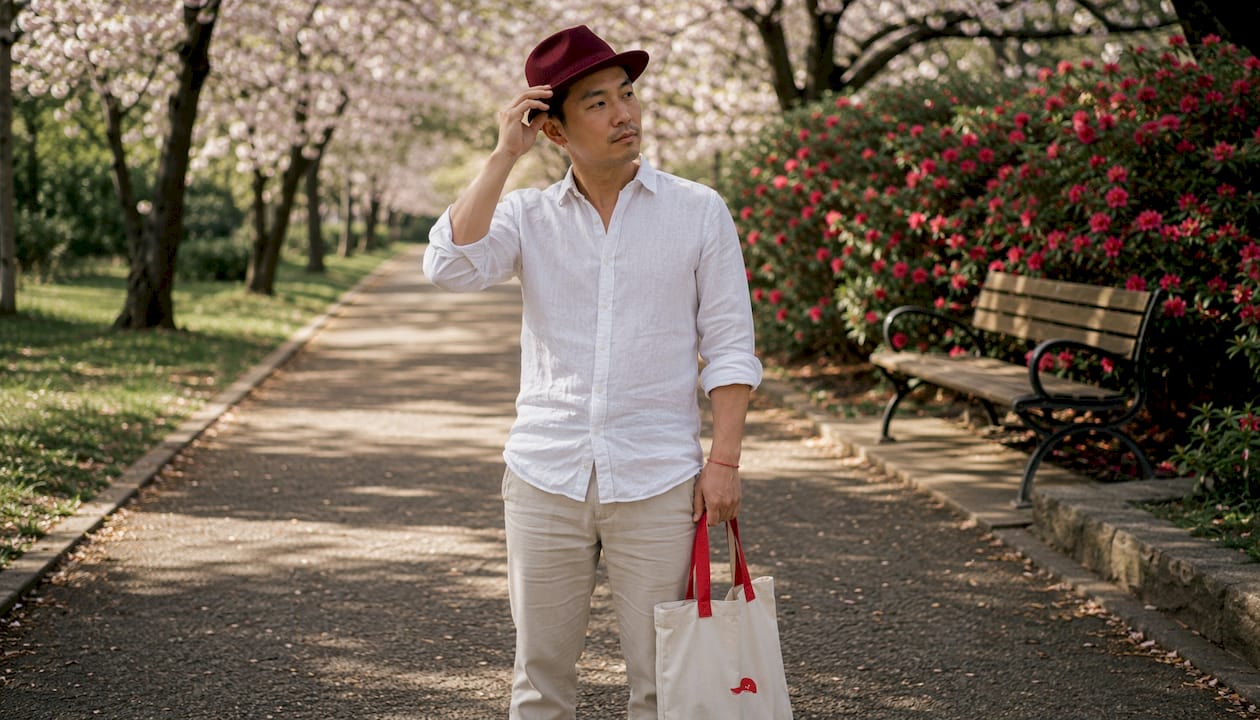
City fedora: dark slim trousers, a plain linen shirt, leather loafers, wool felt fedora in charcoal or camel. The hat lifts the outfit without dominating it. For outfit pairing ideas that work with classic hats, keeping the top simple is the most reliable move.
How a hat should fit: measuring and sizing
A well-styled hat that fits badly still looks wrong. Fit is non-negotiable.
How to measure your head:
- Wrap a soft tape measure (or a piece of string) around your head, sitting approximately 1 cm above your ears and across the mid-forehead.
- Note the measurement in centimetres. This is your hat circumference.
- If using string, mark the length and measure it flat against a ruler.
How a correctly fitted hat feels:
- Snug but not tight. You should be able to fit one finger between the hat and your forehead.
- It should not rock side to side or slide forward when you tilt your head.
- No pinching at the temples or pressure at the crown.
Common fit problems:
- Too shallow: the hat sits high on the head and looks perched. Size up or choose a deeper crown.
- Too wide: the hat slides and bunches. Size down or use an adjustable strap.
- Too tight: leaves a red mark and causes headaches. Size up.
Crown height and face proportions: a taller crown adds perceived length to the face, which suits round faces. A lower crown reduces length, which suits rectangular faces. Circumference affects comfort; crown height affects appearance.
| Head circumference (cm) | Approximate hat size | Notes |
|---|---|---|
| — | XS | Rare in adults; check youth sizing |
| 55 | S | Common for smaller adult heads |
| — | M / 7–7⅛ | Most common adult size |
| 60 | L / 7¼–7⅜ | Common for larger adult heads |
| — | XL / 7½–7⅝ | Choose adjustable or stretch-fit |
| — | XXL / 7¾+ | Look for OSFM with wide adjusters |
OSFM (one size fits most) hats use adjustable straps, snapbacks, or stretch-knit construction. They suit most heads in the 55–60 cm range but may not work well at the extremes. If you are outside that range, a fitted or sized hat is worth the extra step.
Which materials work best for New Zealand conditions
New Zealand’s UV index is among the highest in the world, and the weather shifts fast, especially in coastal and alpine areas. Material choice matters more here than in most places.
Cotton and canvas. Versatile and comfortable. Cotton twill holds its shape well and suits structured caps and flat caps. The downside: it stays damp longer after sweat or sea spray. Fine for city wear; less ideal for a full day at the beach.
Technical synthetics (polyester, nylon, mesh). Quick-dry fabrics and mesh backs outperform cotton on humid, high-UV days. A trucker or bucket hat with a mesh back keeps your head cooler and dries fast after a swim or a rain shower. The best choice for tramping, beach days, and outdoor festivals.
Wool and felt. Excellent shape retention and warmth. Wool felt fedoras and flat caps hold their structure through light rain and wind. Merino wool beanies regulate temperature well in NZ’s variable winter conditions. Not suited to heavy rain or full submersion.
Straw and woven cotton. Lightweight and breathable for summer. Natural straw (like toquilla straw in a Panama hat) is cooler than synthetic alternatives. Avoid leaving straw hats in direct sun when not wearing them, as prolonged UV exposure can bleach and weaken the weave.
Leather. Durable and wind-resistant. Leather hats and Akubra-style felt hats handle coastal salt air well with basic care. Condition leather regularly to prevent cracking.
NZ climate callouts:
- Coastal: rinse salt off after beach days. Salt degrades stitching and stiffens brims over time.
- High UV: choose a brim of at least 7.5 cm for meaningful face and neck coverage.
- Humid summers: mesh-back truckers and quick-dry bucket hats are the practical choice.
- Alpine and southerly winds: a structured wool or felt hat with a full brim provides better wind resistance than an unstructured cap.
Pro Tip: For NZ beach and outdoor days, a wide-brim hat in a tightly woven straw or quick-dry fabric gives you sun protection without overheating. If the brim feels too large for your style, size it to 7.5–8 cm rather than going full wide-brim. You get the UV coverage without the oversized look.
How to move from caps and beanies to classic hats
Most people who wear caps every day feel uncertain about classic hats. The transition is easier than it looks, and it does not require a wardrobe overhaul.
A simple four-step plan:
- Choose a comfortable starter silhouette. Pick a hat that shares some traits with what you already wear. A soft trilby has a similar casual feel to a dad hat. A structured twill trucker is a natural step up from a foam trucker. A knit beanie transitions easily to a knit trilby or a soft fedora.
- Test it with a familiar outfit. Wear the new hat with clothes you already feel good in. Jeans, a plain tee, and clean sneakers work for almost any casual hat. Minimalist outfit formulas reduce the perceived risk of trying something new.
- Start with a neutral colour. Black, camel, navy, and grey work with most wardrobes. Once you are comfortable with the silhouette, add texture or colour.
- Increase formality slowly. Move from casual outfits to smart-casual before attempting a fully tailored look. Confidence with the hat in low-stakes settings builds naturally.
Starter hat matches by what you already wear:
- Dad hat → soft trilby or unstructured fedora
- Foam trucker → structured twill trucker or corduroy cap
- Beanie → knit trilby, soft fedora, or fisherman beanie
- Snapback → flat cap or newsboy cap
Practical shopping tips: try the hat on in natural light if possible. Wear it around the house for 15–30 minutes before deciding. Pair it with a familiar outfit, not a new one. If it still feels right after that, it is the right hat. For 2026 NZ hat trends and style inspiration, Urbancaps stocks a range of starter options across all these silhouettes.
How to clean and store your hats so they last
A hat that is cared for properly keeps its shape and lasts years longer than one that is not. The rules differ by material.
Cleaning by material:
- Structured caps (cotton twill, polyester): hand wash in cool water with a small amount of mild detergent. Use a soft brush on the sweatband. Never put a structured cap in the dishwasher or washing machine, as both warp the brim.
- Trucker hats (mesh back): spot clean the front panel with a damp cloth. The mesh back can be rinsed under cool water. Air dry only.
- Wool and felt hats: spot clean with a damp cloth and a tiny amount of wool wash. Do not submerge. Use a soft brush to restore the nap after drying.
- Straw hats: wipe with a barely damp cloth. Never soak. Store away from direct sunlight.
- Beanies: hand wash in cool water or use a delicate machine cycle in a mesh laundry bag. Lay flat to dry to preserve shape.
Storage tips:
- Store structured hats upside down on their crown or on a hat stand to preserve the brim shape.
- Stuff the crown of a felt or straw hat with tissue paper when storing to prevent denting.
- Keep hats away from direct sunlight during storage. UV fades colours and weakens natural fibres.
- A hat box is the best long-term storage option for felt and straw hats.
After a beach or outdoor day:
- Rinse off any salt or sand with cool fresh water.
- Reshape the crown by hand while the hat is still slightly damp.
- Air dry in shade, never in direct sun or near a heat source.
- Check the sweatband for salt build-up and wipe clean.
When to seek professional help: if a felt or straw hat has lost its shape significantly, a hat blocker or milliner can reshape it. This is worth doing for a quality hat rather than replacing it.
Key takeaways
The most reliable hat styling rule is simple: balance your face shape with the right crown and brim, match the material to the conditions, and keep the rest of the outfit proportional to the hat’s formality.
| Point | Details |
|---|---|
| Face shape first | Identify your shape with a tape measure, then pick a crown height and brim width that creates balance. |
| Fit check before you buy | The hat should sit 1–1.5 cm above your ears and feel snug without pinching or rocking. |
| Material for NZ conditions | Choose mesh or quick-dry fabrics for summer and outdoor days; wool or felt for winter city wear. |
| Start simple when transitioning | Pair a new classic hat with a familiar, neutral outfit to build confidence before increasing formality. |
| Urbancaps starter picks | Urbancaps stocks beanies, fedoras, and classic caps suited to NZ conditions, with fast local delivery. |
A note from Urban
Kiwis have a practical relationship with hats. A hat needs to work in the sun, survive a coastal breeze, and still look decent when you walk into a café. That is a tougher brief than most styling guides acknowledge.
What I see most often is people buying a hat they love the look of on someone else, then never wearing it because it does not fit their face or their wardrobe. The face-shape check in this guide takes about two minutes and genuinely changes which hats you reach for. The other thing worth saying: the outfit matters as much as the hat. A great hat on a mismatched outfit still looks wrong. Keep the rest simple and the hat does its job.
If you are not sure where to start, Urbancaps has a hat styling guide and a team that knows NZ conditions well. Reach out, or browse the range and use the size guide before you checkout.
Urbancaps starter picks for every face shape and season
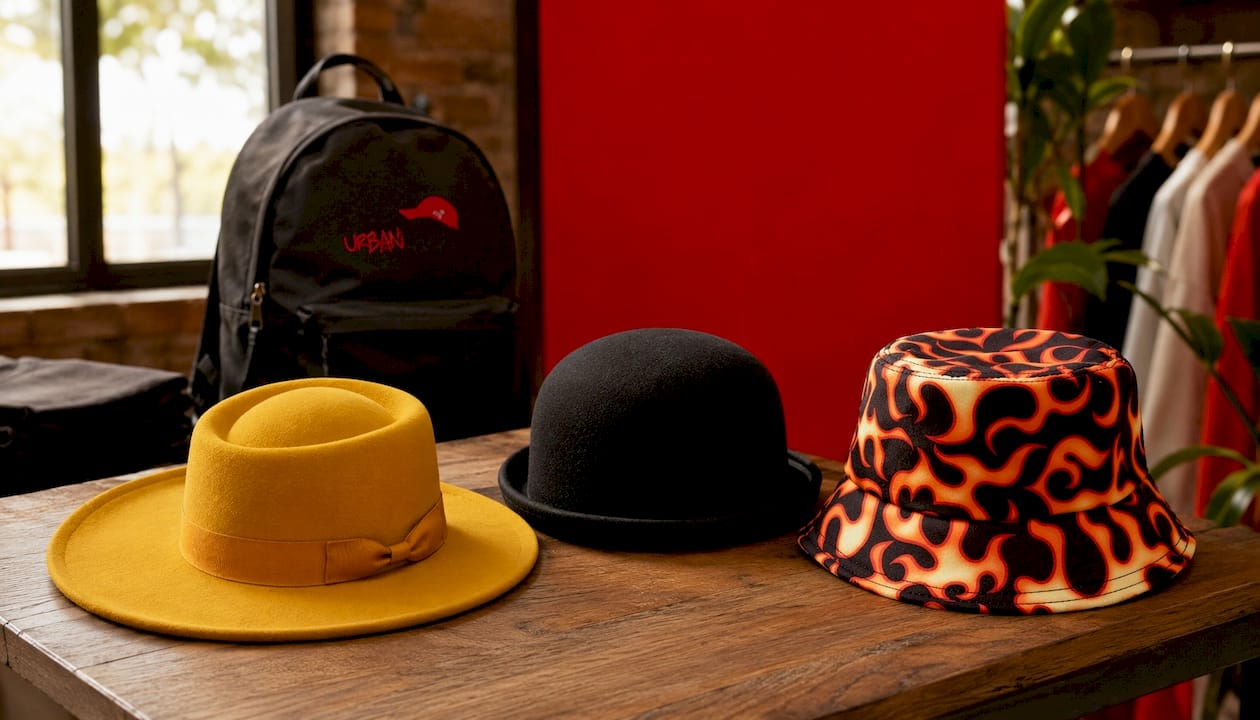
Urbancaps is a proudly NZ-owned headwear store with local stock, fast NZ delivery, and a range built for real Kiwi conditions — not just fashion runways. Here are four starter picks that match the guidance in this article.
The Fashion Knit Beanie is the most versatile winter starter in the range. It suits oval, heart, and triangle face shapes well, sits snugly without bulk, and pairs with almost any casual or smart-casual outfit.
For colder southerly days, the Winter Bonnet Beanie offers a thicker knit construction with more coverage around the ears. It is the practical choice for alpine weekends or Wellington winters.
The Classic Knit Beanie keeps things minimal. A clean silhouette in neutral colours makes it the easiest hat to add to an existing wardrobe without overthinking the pairing.
Moving into classic hats, the Jazz Style Fedora is a solid first fedora. It suits oval and round faces particularly well, and the structured brim holds its shape through NZ’s variable weather. Pair it with chinos and a linen shirt for a smart-casual look that works from the city to a summer event.
Browse the full range at Urbancaps and use the size guide to find your fit before you order.
Useful sources
Further reading and Urbancaps resources to help you style with confidence:
- Men’s Caps NZ: Style & Sun Protection Guide — practical material and function advice for NZ conditions.
- Choosing the right hat for your face shape — detailed face-shape and hat-pairing guide.
- Best hats for your face shape — measuring instructions and proportion explanations.
- Trucker Hats in New Zealand: 2026 Style & Performance Guide — NZ-specific trucker hat trends and material notes.
- How to wear a hat with style and confidence — seven practical tips for classic hat styling.
- Urbancaps hat trends 2026 — NZ-focused trend overview and style guide.
- Urbancaps: how to style caps for any outfit — practical cap styling advice for everyday wear.
- Urbancaps: role of hats in NZ fashion — brand-level context on headwear in New Zealand style.
FAQ
Which hat style is most flattering?
A fedora with a medium brim is the most universally flattering hat style because the structured crown and angled brim work across oval, round, and heart face shapes. The key is matching the brim width to your face width.
What are the hat trends for 2026 in New Zealand?
Premium trucker hats in structured twill, corduroy, and recycled polyester are the standout NZ trend for 2026, replacing the older foam trucker with a smarter, more breathable construction. Tactile textures like washed cotton and corduroy are also prominent across caps and classic styles.
How do you wear a hat without looking ridiculous?
Match the hat’s formality to your outfit, make sure it fits correctly (snug, not perched), and keep the rest of the outfit simple when trying a new style. The most common mistake is pairing a formal hat with very casual footwear, or wearing a hat that is too small and sits on top of the head rather than on it.
How do I measure my head for a hat?
Wrap a soft tape measure around your head approximately 1 cm above your ears and across the mid-forehead. Note the measurement in centimetres and match it to a size chart. Most adult heads fall within the typical range that corresponds to small to medium hat sizes.
Are wide-brim hats worth it for NZ sun protection?
A brim of at least 7.5 cm provides meaningful shade for the face and neck on high-UV days, making wide-brim hats a practical choice for beach days, tramping, and outdoor events in New Zealand. Quick-dry or tightly woven straw versions offer both function and style without overheating.