

Role of hats in fashion: boost style & UV protection 40%
Many people mistakenly view hats as mere accessories or basic sun shields. In reality, headwear in New Zealand plays a far more sophisticated role. With UV radiation levels 40% higher than the global average, hats serve as essential protective gear while simultaneously expressing cultural identity and personal style. This guide explores how local craftsmanship, premium materials, and thoughtful design transform hats into powerful tools for both fashion and function.
Table of Contents
- Introduction To The Dual Role Of Hats: Function And Fashion
- Craftsmanship And Material Quality In Hat Durability And Style
- Functional Roles Of Hats In New Zealand’s UV Environment
- Cultural And Historical Significance Of Hats In New Zealand Fashion
- Comparison Of Popular Hat Styles: Design, Fit, And Use Case
- Sustainability Trends In Premium Hat Production
- Customization And Self-Expression Through Headwear
- Common Misconceptions About Hat Usage And Style
- Explore Premium Hats Blending Style And Protection In New Zealand
- Frequently Asked Questions About The Role Of Hats In Fashion
Key takeaways
| Point | Details |
|---|---|
| Dual protection and style | Hats combine critical UV defense with fashion expression tailored to New Zealand’s outdoor culture. |
| Craftsmanship extends lifespan | Local artisan methods increase durability by 25% compared to mass-produced alternatives. |
| Natural fibers outperform synthetics | Wool, hemp, and cotton offer 2-3 times longer wear with superior breathability. |
| Style matches function and face shape | Selecting hats based on activity, face structure, and design features optimizes both comfort and appearance. |
| Customization empowers identity | Personalized embroidery and color choices reflect cultural narratives and individual expression. |
Introduction to the dual role of hats: function and fashion
Hats occupy a unique space in New Zealand fashion, serving simultaneously as vital protection and powerful style statements. New Zealand’s UV radiation exceeds global averages by 40%, making headwear an essential health tool rather than optional accessory. This environmental reality shapes how Kiwis approach hat selection, prioritizing designs that shield skin while reflecting personal taste.
Beyond sun protection, hats communicate cultural identity and craftsmanship values. Traditional styles like the cheese cutter hat connect wearers to New Zealand heritage dating back to 1875, when Hills Hats established local millinery traditions. These historical roots influence contemporary fashion, with modern designs drawing inspiration from artisan techniques passed through generations.
Local craftsmanship imbues headwear with both durability and cultural resonance. Premium hats crafted in New Zealand balance technical performance with aesthetic appeal, ensuring wearers don’t sacrifice style for functionality. This dual focus defines the modern Kiwi approach to headwear selection.
Consider these key functional and fashion elements:
- Wide brims and UPF-rated fabrics provide measurable sun protection
- Natural fibers offer breathability for outdoor activities
- Traditional construction methods ensure shape retention over years
- Contemporary designs reflect streetwear and heritage influences
“Hats in New Zealand culture not only serve protective purposes but also link to strong heritage and identity, reflecting local craftsmanship and styles like the traditional cheese cutter hat.”
The balance between utility and aesthetics continues evolving as manufacturers integrate new materials while honoring artisan traditions. Understanding this duality helps you select headwear that genuinely serves your lifestyle needs.
Craftsmanship and material quality in hat durability and style
Artisan skills directly determine how long your hat maintains shape, comfort, and appearance. Traditional construction techniques like hand-blocking and precision stitching create structural integrity that mass production cannot replicate. Local New Zealand craftsmanship extends product lifespan by 25% compared to imported alternatives, translating to years of reliable wear.
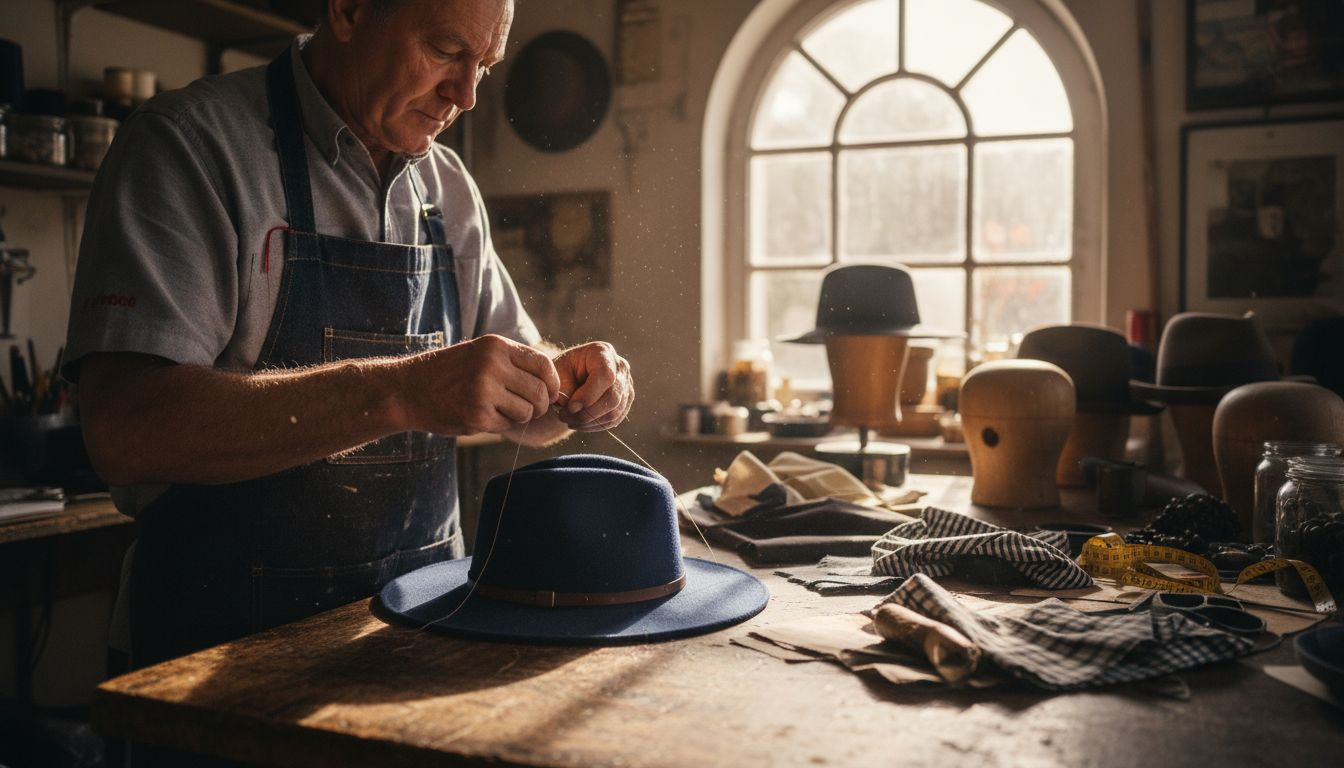
Material selection plays an equally critical role in performance and longevity. Natural fibers like wool, hemp, and cotton outperform synthetics by lasting 2-3 times longer while offering superior breathability. These materials adapt to temperature changes, wicking moisture during activity and providing insulation when needed.
Premium hats combine expert construction with thoughtful material choices:
- Hydraulic and steam block shaping preserves crown structure
- Reinforced sweatbands prevent deterioration from perspiration
- Natural fiber weaves allow airflow without compromising UV protection
- Hand-finished seams eliminate weak points that cause premature failure
The relationship between craftsmanship and comfort becomes apparent during extended wear. Poorly constructed hats create pressure points, slip during activity, or lose shape after brief exposure to elements. Quality construction ensures consistent fit across varied conditions, from beach outings to mountain hikes.
Supporting local artisans strengthens sustainable manufacturing ecosystems while ensuring access to replacement parts and repairs. Many New Zealand hatmakers offer restoration services, extending product life indefinitely through professional maintenance. This circular approach contrasts sharply with disposable fashion models.
Pro Tip: Examine interior construction before purchasing. Quality hats feature even stitching, secure sweatband attachment, and consistent material thickness throughout. These details signal durability that justifies premium pricing.
Investing in superior craftsmanship reduces long-term costs while delivering better daily experience. A well-made hat becomes more comfortable over time as materials conform to your head shape, creating truly personalized fit impossible with mass-produced alternatives.
Functional roles of hats in New Zealand’s UV environment
New Zealand’s geographical position creates extreme ultraviolet exposure that demands serious protective measures. UV radiation levels measure 40% higher than global averages, with peak summer readings frequently reaching extreme categories. This environmental reality makes headwear non-negotiable for outdoor activities lasting more than brief periods.
Effective sun protection requires specific design features beyond basic coverage. Wide brims measuring at least 7.5cm provide shade for face, ears, and neck—areas most vulnerable to skin damage. UPF-rated fabrics block harmful rays while maintaining breathability, preventing overheating during physical activity.
Consistent hat usage correlates strongly with reduced skin cancer rates in populations with high outdoor exposure. Medical research demonstrates that proper headwear decreases facial melanoma risk by up to 70% when combined with other sun safety practices. This protection becomes particularly crucial in New Zealand, where outdoor lifestyles intersect with intense UV conditions.
UV Protection Features:
- Dense weaves block 98% of harmful radiation
- Dark undersides reduce reflected light exposure
- Moisture-wicking bands maintain comfort during perspiration
- Adjustable closures ensure secure fit during wind and movement
Functional design doesn’t require sacrificing aesthetic appeal. Modern UV protective caps integrate technical performance with contemporary styling, allowing wearers to maintain fashion preferences while addressing health needs. Premium manufacturers achieve this balance through innovative material engineering and thoughtful construction.
The outdoor-centric Kiwi lifestyle makes sun protection a daily consideration rather than occasional concern. From beach activities to tramping expeditions, proper headwear serves as foundational safety equipment. Understanding protective features helps you select hats matching specific activity requirements while maintaining style integrity.
Cultural and historical significance of hats in New Zealand fashion
Hats carry deep cultural meaning in New Zealand, serving as symbols of identity beyond simple fashion accessories. Traditional styles like Hills Hats since 1875 have linked headwear to national heritage and artisan pride. These historical connections influence contemporary design, with modern hatmakers drawing inspiration from techniques developed over 150 years.
Millinery traditions in New Zealand blend hydraulic pressing, gas heating, and steam blocking methods refined through generations. This technical knowledge creates distinctive shapes and textures that identify locally-crafted pieces. The cheese cutter style, for instance, reflects working-class origins while maintaining relevance in current fashion contexts.
Cultural narratives embedded in headwear extend beyond aesthetics to represent values and lifestyle choices. Farmers, fishermen, and outdoor enthusiasts have historically relied on specific hat styles suited to their work environments. These functional origins now inspire fashion-forward interpretations that honor heritage while embracing contemporary styling.
Historical Influence Comparison:
| Era | Style Focus | Cultural Significance | Modern Interpretation |
|---|---|---|---|
| 1875-1920 | Workwear durability | Artisan pride and functionality | Heritage collections with premium materials |
| 1920-1970 | Formal millinery | Social status and occasion wear | Refined fedoras and trilby designs |
| 1970-2000 | Casual outdoor | Adventure and sport identity | Technical fabrics with classic silhouettes |
| 2000-2026 | Streetwear fusion | Personal expression and sustainability | Customizable caps with ethical production |
Understanding these historical contexts enriches appreciation for contemporary designs that reference past innovations. Many current styles deliberately echo traditional construction methods while incorporating modern performance materials. This continuity connects wearers to broader cultural stories.
Hats function as cultural artifacts that communicate Kiwi values: durability, practicality, and understated style. Selecting headwear with awareness of these traditions adds depth to fashion choices, transforming functional items into meaningful expressions of identity and heritage appreciation.
Comparison of popular hat styles: design, fit, and use case
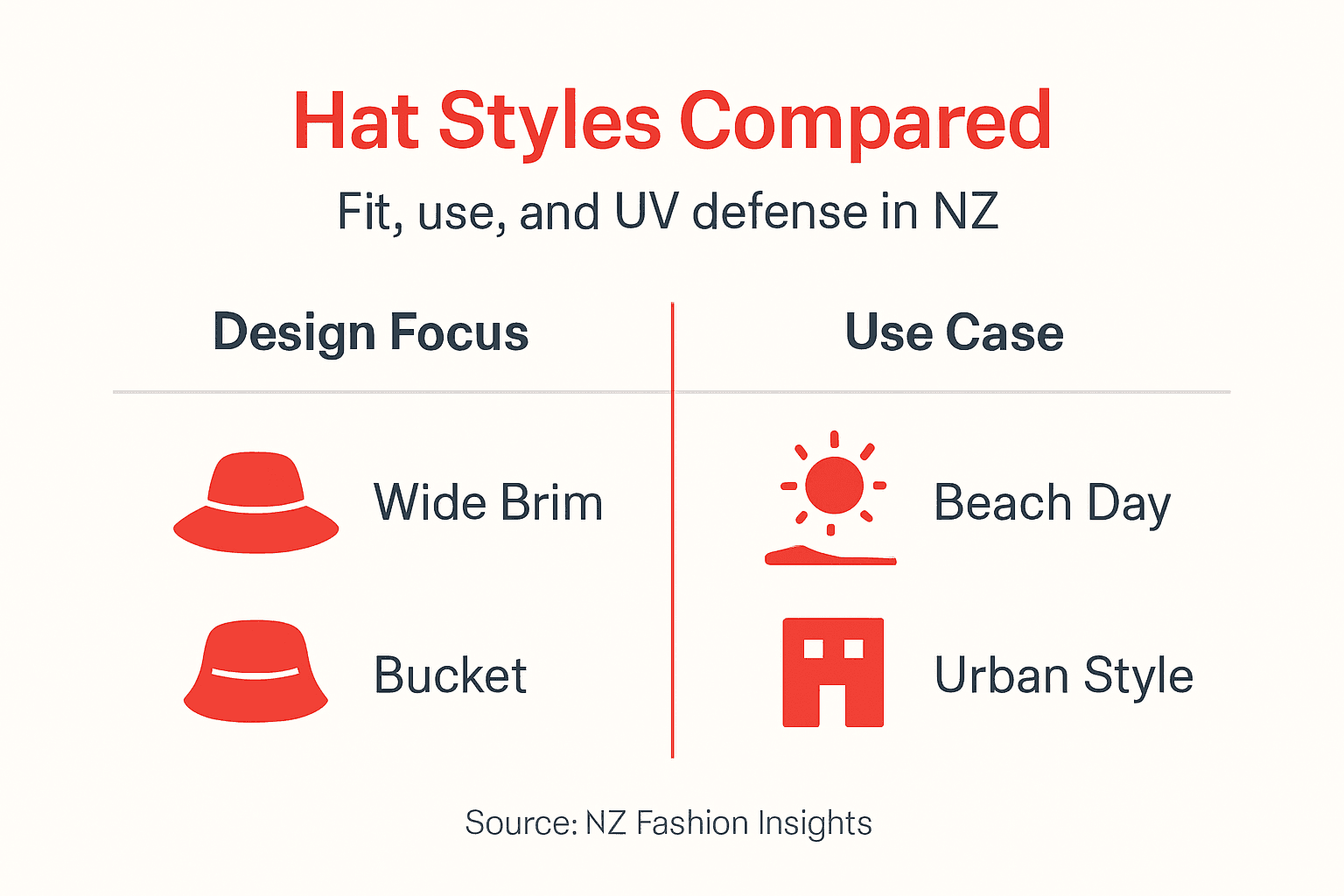
Selecting appropriate headwear requires understanding how different styles serve varied purposes and face shapes. Structured caps maintain formal appearance through reinforced front panels, making them suitable for casual business settings and urban wear. Unstructured alternatives offer relaxed comfort, conforming to head shape for all-day ease.
Material composition dramatically affects performance across activities. Natural fibers provide breathability and moisture management essential for outdoor pursuits, while maintaining shape through repeated wear. Synthetic blends may offer water resistance but typically sacrifice comfort and longevity.
Style Selection Guide:
- Flat brim bucket hats: Wide coverage for beach and hiking activities, suit round and oval face shapes
- Structured snapbacks: Urban styling with adjustable fit, complement angular and square faces
- Unstructured dad caps: Maximum comfort for daily wear, work with all face shapes through soft construction
- Wide brim fedoras: Formal occasions and sun protection, best for oval and heart-shaped faces
- Fitted wool caps: Cold weather insulation with classic styling, suit most face structures
Pro Tip: Measure your head circumference 1cm above eyebrows before purchasing. This ensures proper sizing, particularly important for structured styles that don’t adjust easily.
Face shape significantly influences how hat styles frame your features. Round faces benefit from angular designs with height, while square faces suit rounded crowns that soften jawlines. Oval face shapes accommodate most styles, offering flexibility in selection based on activity and preference.
Consider these practical factors when choosing hats for style and fit:
- Activity level determines needed adjustability and security
- Climate conditions require appropriate material breathability
- Personal style preferences guide color and design details
- Maintenance requirements affect long-term practicality
Exploring popular hat styles in New Zealand reveals regional preferences shaped by climate and culture. Bucket hats dominate beach communities, while structured caps prevail in urban centers. Understanding these patterns helps identify styles matching your lifestyle and environment.
Sustainability trends in premium hat production
Environmental consciousness increasingly shapes premium headwear manufacturing as consumers prioritize ethical production alongside quality. Organic wool, hemp, cotton, and recycled fabrics dominate 2026 collections, reducing carbon footprints without compromising durability or style. These materials offer performance advantages while supporting regenerative agriculture.
Sustainable hat production extends beyond raw materials to encompass entire manufacturing processes. Water-efficient dyeing techniques, renewable energy powered facilities, and zero-waste pattern cutting minimize environmental impact. Premium makers view sustainability as quality enhancement rather than compromise.
Durable construction inherently supports sustainability by reducing replacement frequency. A well-crafted hat lasting 5-10 years prevents multiple cheaper alternatives from entering landfills. This longevity-focused approach aligns economic and environmental interests, making premium pricing more justifiable.
Sustainable Material Benefits:
- Organic wool provides natural water resistance and temperature regulation
- Hemp cultivation requires minimal pesticides and water compared to cotton
- Recycled polyester diverts plastic waste while offering technical performance
- Plant-based dyes eliminate toxic chemical runoff
Transparent supply chains allow conscious consumers to verify ethical claims. Reputable manufacturers document material sourcing, labor conditions, and environmental certifications. This transparency builds trust while holding industry accountable to sustainability promises.
Local production reduces transportation emissions while supporting regional economies. New Zealand-made hats minimize carbon footprints associated with international shipping, simultaneously ensuring quality control through direct manufacturer oversight. This localization trend strengthens both environmental and economic sustainability.
Modern sustainable hats demonstrate that environmental responsibility enhances rather than limits design possibilities. Innovative materials unlock new textures, colors, and performance characteristics while meeting ethical standards increasingly important to fashion-forward consumers.
Customization and self-expression through headwear
Personalized headwear enables powerful identity expression through deliberate design choices. Embroidery, patches, and custom colorways dominate streetwear and cultural expression trends in 2026, allowing wearers to craft unique pieces reflecting individual narratives. This customization transforms mass-produced items into personal statements.
Embroidered designs communicate affiliations, beliefs, and aesthetic preferences through visual symbolism. From corporate logos to artistic motifs, these additions create conversation pieces that strengthen community connections. Technical advances in embroidery allow intricate detail work previously impossible on curved hat surfaces.
Color customization extends beyond basic palette selection to include gradient effects, pattern mixing, and material contrasts. These options empower precise aesthetic control, ensuring headwear complements existing wardrobe choices while maintaining distinctiveness. Premium manufacturers offer extensive customization menus accommodating diverse style visions.
Popular Customization Options:
- Text embroidery for names, dates, or meaningful phrases
- Logo application representing brands, teams, or personal symbols
- Patch placement adding texture and visual interest
- Interior personalization with custom sweatbands or linings
Customized hats build stronger emotional connections than standard products, increasing perceived value and long-term satisfaction. Wearers invest more care in maintaining pieces reflecting personal effort and thought. This psychological factor extends product lifespan through attentive ownership.
Pro Tip: Start with subtle customization like interior monograms if uncertain about visible personalization. This allows expression without permanent exterior commitment, particularly useful for evolving style preferences.
Cultural identity finds powerful voice through customized headwear incorporating traditional symbols, indigenous patterns, or heritage colors. These designs honor ancestry while making cultural connections visible in contemporary contexts. The trend strengthens as younger generations seek authentic identity expression through fashion.
Common misconceptions about hat usage and style
Several persistent myths limit how people approach headwear selection and usage. The belief that hats serve only sun protection or pure fashion ignores their multifaceted roles in cultural expression and identity communication. This narrow view prevents appreciation for craftsmanship and heritage embedded in quality pieces.
Quality perception often relies on price alone, overlooking construction details and material authenticity. Mass-produced hats may feature premium branding without corresponding craftsmanship, while locally-made alternatives offer superior durability at comparable costs. Understanding quality markers helps identify genuine value.
The misconception that sustainable hats sacrifice style or performance persists despite evidence to the contrary. Modern eco-friendly materials match or exceed conventional alternatives in durability, comfort, and aesthetic appeal. This false choice between ethics and quality no longer reflects manufacturing realities.
Common Hat Myths Debunked:
- Myth: All hats provide equal sun protection. Reality: UPF ratings and brim width create measurable performance differences.
- Myth: Natural fibers require excessive maintenance. Reality: Wool and cotton need less frequent washing than synthetics due to natural antimicrobial properties.
- Myth: Premium hats aren’t worth the investment. Reality: Quality construction extends lifespan by 25%, reducing long-term costs.
- Myth: Hat styles are purely trend-driven. Reality: Classic designs remain relevant for decades through timeless construction and versatile styling.
The assumption that hats have declined in fashion relevance ignores thriving streetwear and premium markets. Contemporary designers continuously innovate within headwear categories, creating fresh interpretations that resonate with younger consumers. Social media amplifies hat culture, building communities around specific styles and brands.
Understanding these misconceptions empowers more confident purchasing decisions. Recognizing the true value proposition of quality headwear—combining protection, durability, cultural significance, and style—helps you invest wisely in pieces serving multiple purposes across years of wear.
Explore premium hats blending style and protection in New Zealand
Now that you understand how craftsmanship, materials, and design intersect in premium headwear, it’s time to explore options matching your specific needs. Discover collections that honor New Zealand’s unique UV challenges while expressing your personal style through thoughtfully constructed pieces.

Our curated selection emphasizes locally-influenced designs combining proven protective features with contemporary aesthetics. Whether you need wide-brim coverage for outdoor adventures or structured caps for urban wear, you’ll find options built to last through New Zealand’s demanding conditions. Each piece reflects the quality standards and cultural awareness discussed throughout this guide.
Explore detailed guidance on choosing the right hat for your face shape and lifestyle requirements. Learn how quality craftsmanship extends product lifespan while enhancing daily comfort. Understand why UV protection matters specifically in New Zealand’s intense radiation environment. These resources transform theoretical knowledge into practical selection skills.
Frequently asked questions about the role of hats in fashion
Why are hats so important in New Zealand fashion and function?
New Zealand’s UV radiation exceeds global averages by 40%, making protective headwear essential for outdoor health. Beyond sun safety, hats express cultural identity and personal style through designs reflecting local heritage and contemporary fashion trends.
How do local materials improve hat durability?
Natural fibers like wool, hemp, and cotton last 2-3 times longer than synthetics while providing superior breathability. Local craftsmanship techniques extend product lifespan by 25% through precision construction that maintains shape and comfort over years of wear.
What hat styles are best for UV protection?
Wide-brim bucket hats and structured caps with UPF-rated fabrics offer optimal sun defense. Look for brims measuring at least 7.5cm and dense weaves blocking 98% of harmful radiation while maintaining breathability for comfort during activity.
Can hats be sustainable without sacrificing style?
Modern sustainable hats using organic wool, hemp, and recycled materials match conventional alternatives in durability and aesthetic appeal. Premium manufacturers prove environmental responsibility enhances design possibilities through innovative material engineering and transparent production practices.
How can I express personal identity through hat customization?
Embroidery, patches, and custom colorways transform standard hats into personal statements reflecting your values and aesthetic preferences. These modifications create unique pieces that strengthen community connections while honoring cultural heritage through deliberate design choices.