


Make a wool hat water resistant for everyday wear
Yes, you can waterproof a wool hat, though the honest word is “water resistant” rather than fully waterproof. Wool naturally sheds light rain, but a soaking will get through eventually. For everyday wear, a wool-safe spray gives the best balance of protection and looks. Wax suits hats that face heavy weather often. Lanolin suits delicate or vintage felt that needs gentle restoration more than heavy defence.
- Spray: best all-rounder for daily commutes and light showers
- Wax: strongest barrier, but changes texture slightly
- Lanolin: gentlest option, restores fibres rather than coating them
Whichever method you choose, spot test first and never dry a treated hat near direct heat.
Key Takeaways
Wool hats become genuinely water resistant, not fully waterproof, through spray for daily wear, wax for heavy exposure, and lanolin for gentle fibre restoration.
| Point | Details |
|---|---|
| Spray suits everyday wear | Light, even coats with full cure time between them beat one heavy application. |
| Wax needs a lighter touch on felt | Apply in small sections with gentle warmth to avoid a stiff, shiny finish. |
| Spot test every time | Test on the inside crown or brim underside before treating the whole hat. |
| Reapply on a schedule | Refresh spray every three to six months; check wax after heavy weather. |
| Buy weather-ready when it suits you | Urbancaps’ Thunderbolt Ski Hat and Ski Skull Beanie skip the DIY treatment step entirely. |
Table of Contents
- What you need to prepare a wool hat for waterproofing
- How to apply a spray-on waterproofing treatment
- Should you wax your wool hat instead?
- Can lanolin waterproof a wool hat gently?
- How do you dry and reshape a wet wool hat?
- How often should you reapply waterproofing treatment?
- Does wool type or hat construction change how you waterproof it?
- Sources
- FAQ
What you need to prepare a wool hat for waterproofing
Before any treatment goes near your hat, get the surface clean and check how the wool reacts. Skipping prep is the most common reason a spray or wax job goes patchy.
Gather these before you start:
- A soft-bristled brush for dust and surface dirt
- Clean, lint-free cloths (microfibre works well)
- A wool-safe waterproofing spray, beeswax or paraffin, or a lanolin solution
- A well-ventilated space, ideally outdoors or near an open window
Brush the hat in one direction to lift dust, then spot clean any marks with a barely damp cloth. Once it is dry, test your chosen product on the inside crown or under the brim. Apply a small amount, leave it to dry fully, and check for colour change, staining, or altered texture before treating the whole hat. This step matters more on felted wool, where a wax or heavy spray can flatten the nap.
Pro Tip: Test on the underside of the brim, not the crown. It is the least visible spot if something goes wrong, and it usually mirrors how the rest of the felt will react.
How to apply a spray-on waterproofing treatment
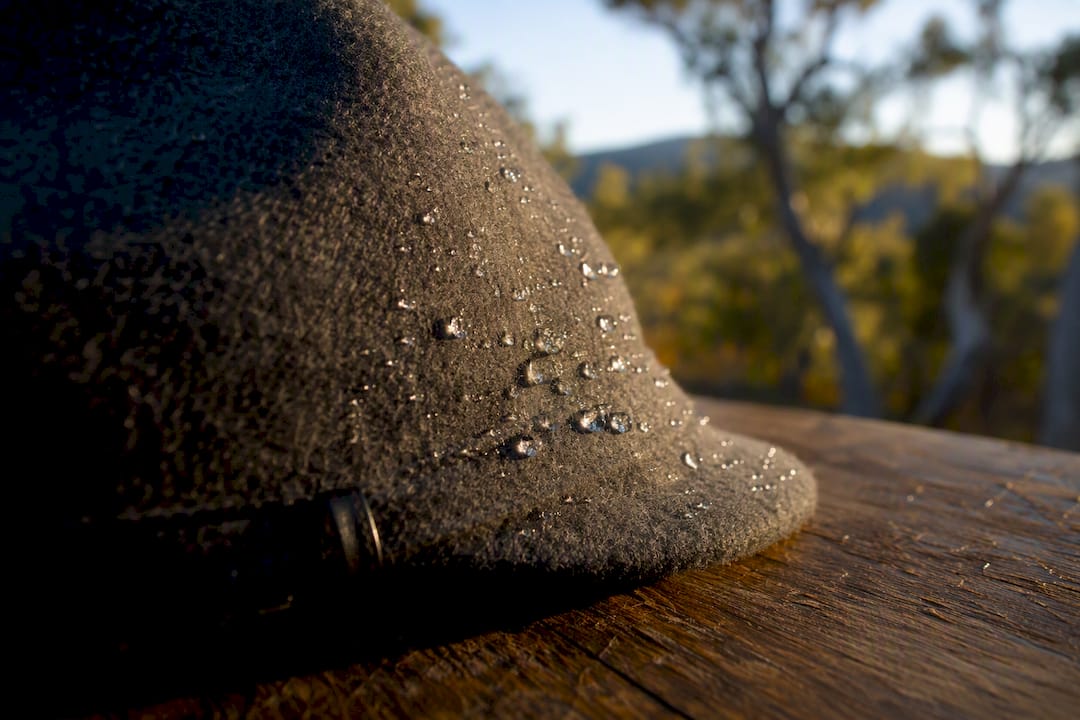
Spray is the fastest and least invasive way to waterproof a wool hat, and it is what Urbancaps recommends for regular, everyday-wear protection. Look for labels that mention “breathable,” “wool-safe,” or “nano-technology” rather than generic fabric sealants, which can trap moisture inside the felt instead of keeping it out.
Apply it properly:
- Work outdoors or somewhere with good airflow
- Hold the can a suitable distance from the hat, approximately a standard spray range advised in care guides
- Spray in light, even coats rather than one heavy pass
- Let each coat air dry fully before adding another
Nano-technology sprays are worth seeking out because they form a breathable barrier and do not noticeably change the felt’s finish, unlike older heavy-duty sealants.
Once the final coat has cured, flick a few drops of water onto the surface. If they bead and roll off, the treatment has taken. If they soak straight in, it needs another light coat. The main trade off is durability: spray holds up well against drizzle and light showers but will not stop a genuine soaking during sustained heavy rain.
Should you wax your wool hat instead?
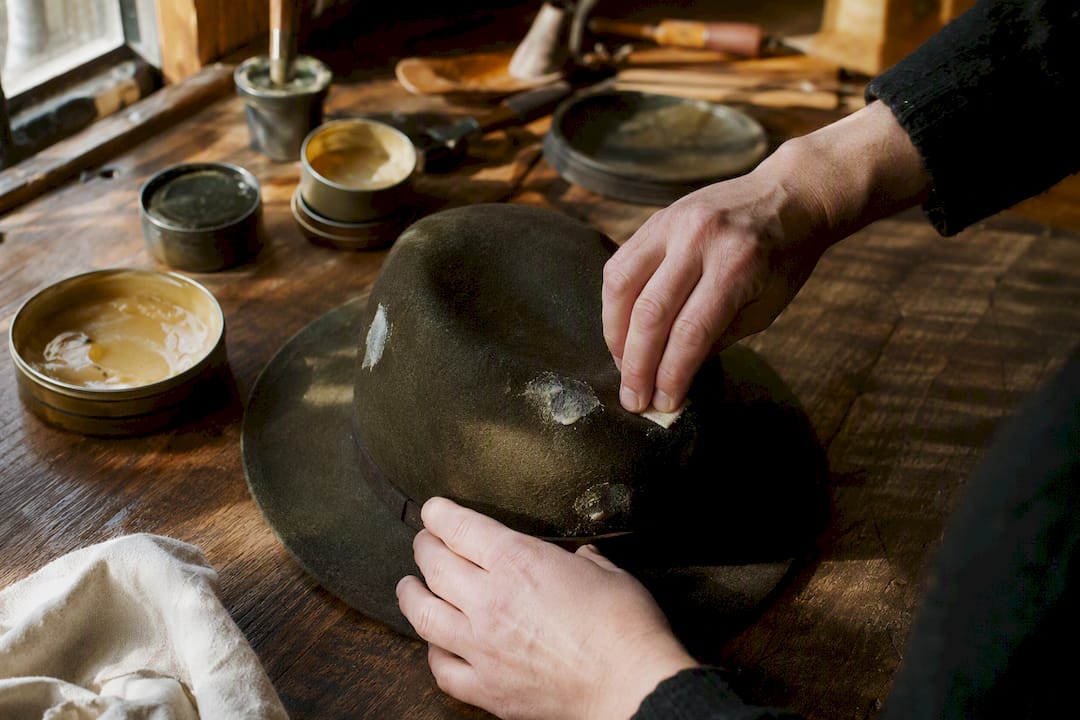
Wax gives a tougher, longer-lasting barrier than spray, and it is worth considering if you are out in wet weather often rather than occasionally. Beeswax or paraffin both work, but they do change the feel of the felt slightly, so this method suits hats where function matters more than a pristine finish.
Here is how to do it without ruining the nap:
- Warm a small amount of wax between your fingers or with a hairdryer on low heat until it softens
- Work it into a small section of the hat at a time, rubbing gently with a cloth
- Use a hairdryer on its lowest setting, held well back, to help the wax melt into the fibres and set evenly
- Leave the hat to cure for several hours before wearing it
Applying safely means avoiding direct or high heat at every stage, since felt scorches or shrinks quickly under anything stronger than a gentle warm setting.
Pro Tip: Work in small patches rather than coating the whole hat at once. It is far easier to blend wax evenly this way, and you will avoid the dull, waxy sheen that comes from overloading one area.
Can lanolin waterproof a wool hat gently?
Lanolin will not waterproof a wool hat the way spray or wax does, but it restores natural oils and adds mild water resistance without stiffening the felt. It suits vintage hats, softer knits, or any wool that has started to feel dry and brittle.
Mix roughly one teaspoon of lanolin into a small bowl of lukewarm water. Dab a soft cloth into the solution, wring out any excess, and wipe it over the hat in even strokes. Let it air dry naturally, away from heaters or direct sun.
- Gentler on fibres than sprays or waxes
- Improves softness and flexibility as a side benefit
- Offers noticeably less protection against sustained rain
- Best used as a conditioning step between heavier treatments, not a replacement for them
How do you dry and reshape a wet wool hat?
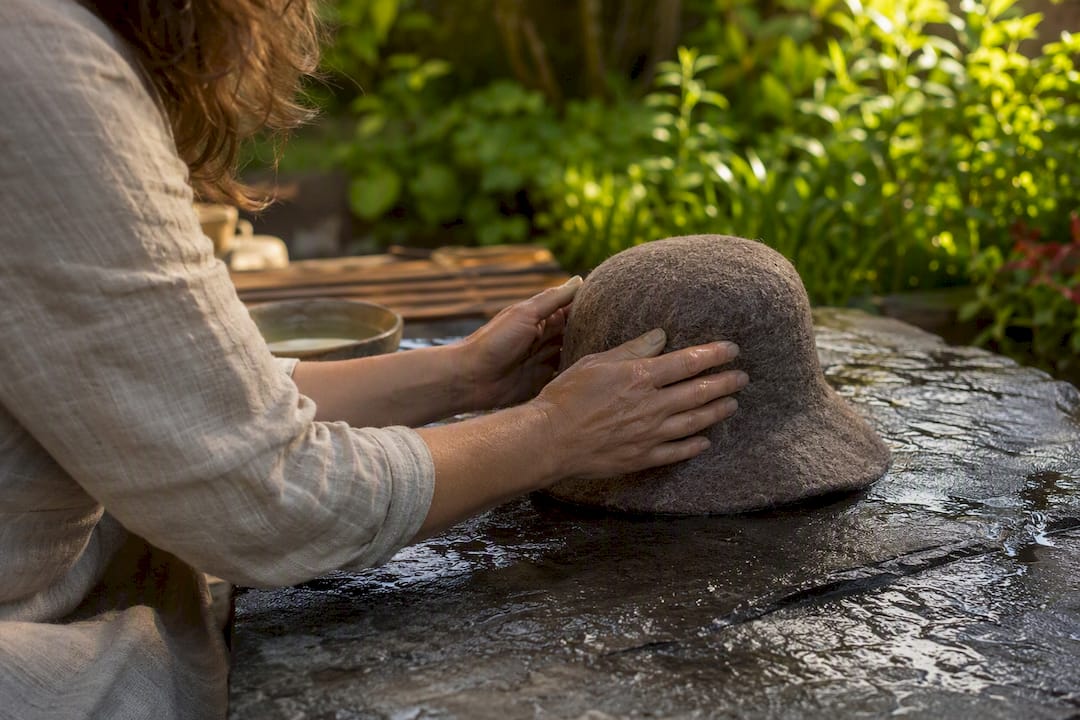
What you do in the first few minutes after a hat gets wet matters as much as any treatment. Shake off excess water gently rather than rubbing it, which can push moisture deeper into the felt and disturb the nap.
- Shake the hat lightly to remove surface water
- Rest it crown-down on a hat stand, or stuff the crown loosely with a soft cloth to hold its shape
- Leave it in a well-ventilated spot away from heaters, fires, or direct sun
- Once dry, brush gently to lift the nap back into place
Hicks & Brown’s care advice confirms wool felt handles light rain well on its own, but heavy rain will soak through, and drying it slowly indoors is the safest recovery method. If the brim has shrunk slightly, light steam from a kettle, held at a safe distance, can relax the fibres enough to reshape it by hand.
Pro Tip: Never use a hairdryer on high heat to speed up drying. It sets shrinkage in permanently, whereas slow air drying gives you a chance to correct the shape while the felt is still pliable.
How often should you reapply waterproofing treatment?
Treatments wear off well before it is obvious to the eye, so build reapplication into your routine rather than waiting for a soaking to remind you.
- Reapply spray periodically, typically a few times per year, depending on how often the hat is exposed to wet conditions
- Check wax coatings less frequently, but inspect after any particularly heavy storm
- Run the water-bead test every season: flick a few drops on the surface and watch whether they roll off or soak in
- Brush regularly and store on a hat stand between wears to protect the treatment itself
JTFelt notes that wool offers genuine water repellency against showers but absorbs heavy rain regardless of treatment, which is exactly why the bead test matters more than a calendar reminder. Urbancaps’ own wool hat care guide covers the cleaning and storage habits that keep any waterproofing treatment working longer.
Why trust these waterproofing methods?
These steps draw on established felt-care practice, not guesswork, and align with guidance from specialist hatters and Urbancaps’ own product-care library.
- Application steps match methods recommended across professional hat-care resources
- Urbancaps maintains a growing library of hat-care guides covering cleaning, storage and reshaping
- Spot-testing and gentle drying are consistent recommendations across every source reviewed for this guide
Does wool type or hat construction change how you waterproof it?
Not all wool hats take treatment the same way, and the difference usually comes down to how the fibres are structured, not just the fabric itself. Felted wool, like the kind used in fedoras and homburgs, is made by matting fibres under heat and pressure into a dense, tight surface. That density already gives it a head start on water resistance, and it holds spray and wax evenly because there is no obvious weave to soak up excess product unevenly.
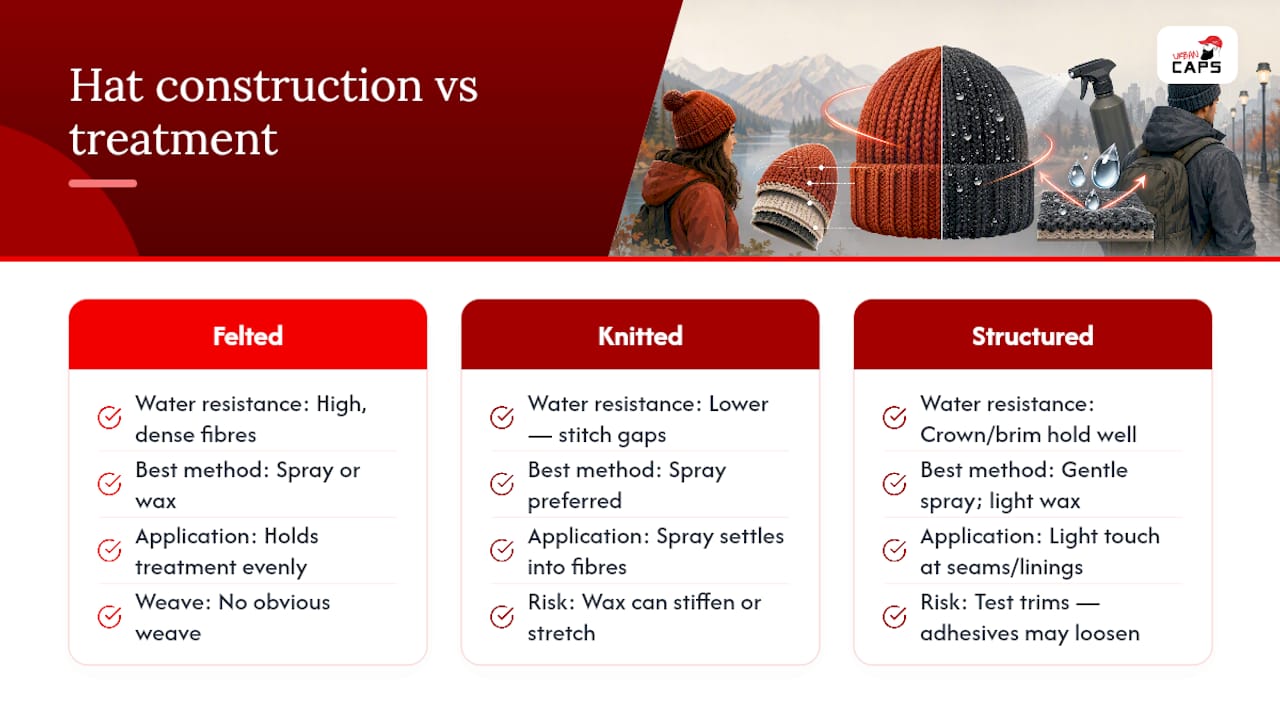
Knitted wool, the kind found in beanies and skull caps, behaves differently. The looped stitch structure has small gaps that let water through more easily, and it can stretch or lose shape if a heavy wax coating is worked in unevenly. Spray tends to suit knits better than wax for this reason, since it settles into the fibres without adding stiffness across the stitches.
Structured pieces with stiffer brims, like flat caps, hold treatment well on the crown and brim but need a lighter touch around any stitched seams or fabric linings, where product can seep through and mark the inside. Novelty and costume styles, including steampunk-style hats with attached hardware or trims, need testing around any glued or riveted details, since sprays and waxes can loosen adhesive over time. Always match the method to the construction in front of you rather than assuming one approach works across every style.
A quick note on priorities and caution
Spray is the right default for everyday wear. It is low fuss and forgiving. Save wax for hats that face heavy weather regularly, and treat lanolin as restoration, not defence. If a hat has real sentimental or antique value, take it to a milliner before experimenting.
— Urban
Buying weather-ready instead of DIY treating every hat
Not every hat needs a waterproofing project, and sometimes the simpler move is choosing headwear already built for wet, cold conditions. Urbancaps stocks pieces designed with weather in mind from the outset, so you are not layering spray onto something never meant for the outdoors.

The Thunderbolt Ski Hat is built for exactly the kind of exposure that would push a treated wool hat past its limits, with ear protection for genuinely cold, wet days outdoors. If you want something lighter for everyday cold snaps, the Ski Skull Beanie covers snowboarding and general outdoor wear without any extra prep work on your end. For readers who want the classic wool look with more durability built in, the Heritage Herringbone Ivy Cap pairs a traditional flat-cap style with sturdier construction than most fashion-first alternatives on the market, including options from broader retailers like Qahwat Al’ard’s hat collection. Browse the full range on the Urbancaps shop to find a hat that suits your conditions without the ongoing treatment schedule.
Sources
Hicks & Brown, JTFelt, Lbora, and UpscaleMenswear all informed the care methods above.
- How to care for wool felt hats – JTFelt
- Can a wool hat be waterproofed? Practical tips for long-lasting protection – UpscaleMenswear
FAQ
How do you make a wool hat waterproof?
Clean and spot test first, then apply a wool-safe spray in light, even coats, letting each one cure fully before wearing the hat. This gives the best everyday protection without changing the felt’s texture.
Can wool hats get wet in the rain?
Wool handles light rain well on its own, but heavy or sustained rain will soak through untreated felt. Shake off excess water and air dry away from direct heat if it does get wet.
What is a good waterproofing spray for hats?
Look for a wool-safe spray labelled breathable or nano-technology based, since these create a protective barrier without altering the look or feel of the felt.
Is wax or spray better for waterproofing a wool hat?
Spray suits everyday wear because it is quick and barely visible, while wax gives stronger protection for hats facing regular heavy weather, at the cost of a slightly firmer texture.
How often should you waterproof a wool hat?
Reapply spray roughly every three to six months with regular wear, and check wax coatings after any particularly wet or stormy stretch rather than on a fixed schedule.