


What is a flat cap? 45% of Kiwis embrace stylish durability
You’ve probably seen flat caps on older gentlemen and assumed they’re relics of the past. Yet 45% of flat cap buyers in New Zealand were aged 18-35, proving this heritage headwear thrives among younger fashion enthusiasts. This guide explains what flat caps are, their rich history, premium materials, distinctive design features, suitability for New Zealand’s climate, and how to wear them with confidence. Whether you’re seeking durable outdoor gear or timeless style, understanding flat caps helps you make informed choices.
Table of Contents
- Introduction To Flat Caps: Definition And Origins
- Materials And Craftsmanship Behind Premium Flat Caps
- Design Features That Define Style And Practicality
- Flat Caps In New Zealand: Suitability For Weather And Lifestyle
- Comparing Flat Caps With Other Popular Headwear
- Common Misconceptions About Flat Caps
- Styling And Practical Use: How To Wear A Flat Cap In New Zealand
- Explore Quality Flat Caps At Urban Caps
- Frequently Asked Questions About Flat Caps
Key takeaways
| Point | Details |
|---|---|
| Historical roots | Flat caps emerged in the British Isles from the 14th century, with English law mandating wool caps in 1571 to boost trade. |
| Premium materials | Natural fibers like wool and tweed provide durability and weather resistance, crucial for New Zealand’s variable climate. |
| Distinctive design | Rounded, low-profile crowns with small stiff brims reduce wind flap and enhance outdoor comfort. |
| Modern versatility | Flat caps suit both urban commuting and rural activities across New Zealand’s diverse lifestyle needs. |
| Style for all ages | Younger New Zealanders embrace flat caps for contemporary fashion paired with traditional craftsmanship. |
Introduction to flat caps: definition and origins
A flat cap is a rounded, low-profile hat with a small stiff brim, historically crafted from wool or tweed. This iconic headwear traces back to 14th century British Isles, particularly England, Scotland, and Ireland. By 1571, English law mandated wool caps to boost the domestic wool trade, spreading their popularity across social classes.
Flat caps carried deep cultural significance in Irish and Scottish communities, representing working-class identity and practical outdoor wear. Farmers, laborers, and tradespeople relied on these caps for warmth and weather protection. Over centuries, the design evolved from purely functional to include refined styling that appealed to urban dwellers.
New Zealand’s connection to flat caps stems from British heritage and the hat’s remarkable functionality. Kiwi farmers and outdoor enthusiasts adopted flat caps for their durability in variable weather. Today, this heritage endures as New Zealanders blend traditional craftsmanship with modern fashion sensibilities.
Key historical and cultural milestones include:
- 14th century emergence in British working communities for practical warmth
- 1571 English law requiring wool caps on Sundays and holidays
- 19th century adoption across Irish and Scottish rural populations
- Early 20th century spread to New Zealand through British immigration
- 21st century revival among younger fashion-conscious consumers worldwide
The flat cap’s enduring appeal lies in its combination of heritage authenticity and adaptable style. Unlike fleeting fashion trends, this headwear maintains relevance through quality construction and timeless design. Understanding its origins helps you appreciate why flat caps remain a staple in New Zealand wardrobes today.
Materials and craftsmanship behind premium flat caps
Quality flat caps rely on natural fibers such as wool and tweed for durability and weather adaptiveness. These materials excel in moisture control, wind resistance, and temperature regulation, making them ideal for New Zealand’s unpredictable climate. Heritage tweeds offer exceptional longevity, often lasting decades with proper care.
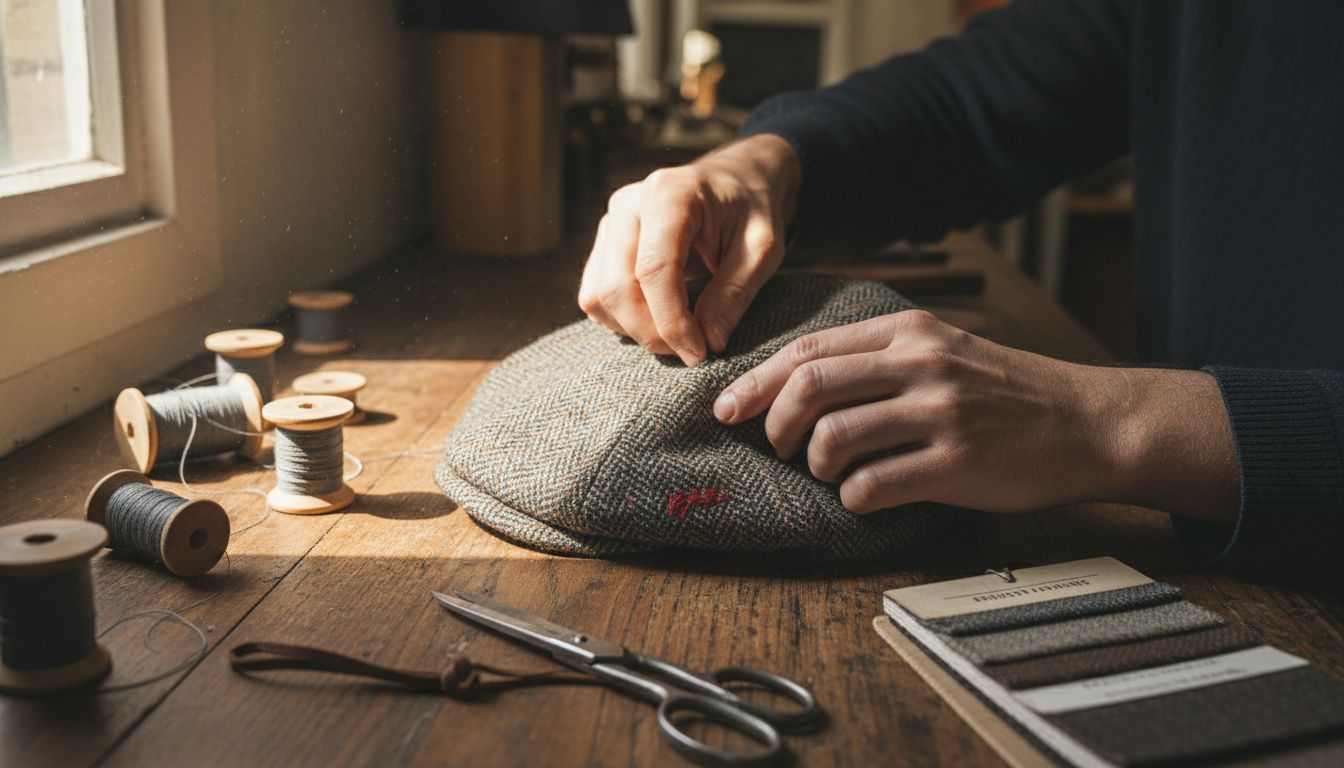
Wool provides natural water repellency and breathability. When rain strikes, wool fibers absorb moisture without feeling wet, keeping your head comfortable. Tweed, a rugged woven wool fabric, adds texture and visual interest while enhancing durability. Cotton blends incorporate moisture-wicking properties for warmer days, though they sacrifice some weather protection.
Expert craftsmanship and quality determine how well a flat cap performs and retains its shape. Skilled tailors carefully shape each crown panel, ensuring the cap sits comfortably without sagging. Brim construction requires precise stitching and stiffening to maintain structure through years of wear. Premium caps last 30-40% longer than mass-produced alternatives, especially with frequent outdoor use.
Key natural fibers and their benefits:
- Merino wool: Soft, breathable, naturally odor-resistant, regulates temperature in 5°C to 18°C range
- Heritage tweed: Dense weave provides wind resistance, classic texture, superior durability
- Cotton blends: Lightweight, moisture-wicking for spring and autumn, easier laundering
- Wool/polyester blends: Enhanced shape retention, wrinkle resistance, cost-effective durability
Pro Tip: Choose natural fibers and heritage tweeds for superior weatherproofing and longevity, especially if you spend significant time outdoors or in coastal areas where moisture and wind are constant challenges.
The lining also matters. Quality flat caps feature breathable cotton or silk linings that prevent overheating while wicking sweat away. Cheaper alternatives use synthetic linings that trap heat and deteriorate quickly. Inspect seam quality, as hand-stitched or reinforced seams withstand stress far better than basic machine stitching.
Design features that define style and practicality
Flat caps feature a rounded, low-profile crown with a small stiff brim, distinguishing them from fuller newsboy caps or casual baseball caps. This streamlined silhouette reduces wind flap during outdoor activities, a crucial advantage for hiking, cycling, or coastal walks. The crown typically consists of one or two panels sewn together, creating smooth lines without excessive bulk.
The small brim, usually 4 to 6 centimeters, balances sun protection with unobstructed vision. Unlike wide-brimmed hats that can catch wind or block peripheral sight, flat cap brims shield your eyes without interfering with daily tasks. The stiff construction prevents drooping, maintaining a polished appearance through regular wear.
Style benefits extend beyond function. The sleek silhouette complements smart-casual and casual outfits, transitioning easily from coffee shops to countryside trails. Neutral colors like charcoal, navy, and brown pair with most wardrobes, while rich tweeds add texture and visual depth. Understanding design features of flat caps helps you select caps that match your lifestyle.
Design elements contributing to practicality and style:
- Single or two-panel crown: Streamlined profile, easier to fold and pack for travel
- Reinforced brim: Maintains shape, prevents curling, offers consistent sun shading
- Elastic or adjustable sweatband: Customizable fit, prevents slipping during activity
- Snap button front (optional): Secures brim for added wind resistance or style variation
- Interior lining: Comfort layer that wicks moisture and protects fabric integrity
Pro Tip: Look for well-shaped brims and quality crown panels for maximum durability and style retention, as poorly constructed caps lose shape quickly and develop unsightly creases that undermine their sophisticated appearance.
Brim attachment methods vary. Traditional flat caps sew the brim directly to the crown with reinforced stitching, creating a permanent, robust connection. Some modern designs use snap buttons allowing brim adjustments, though this adds complexity and potential weak points. The crown’s interior often includes a moisture-wicking band that stabilizes fit and enhances comfort during extended wear.
Flat caps in New Zealand: suitability for weather and lifestyle
New Zealand’s cooler and unpredictable weather, with autumn and spring temperatures ranging from 5°C to 18°C, makes flat caps popular for their adaptability to variable climates. The lightweight warmth from wool blends provides comfort without overheating, while breathability prevents moisture buildup during physical activity. This balance suits both urban commuting and outdoor rural pursuits.
The stiff brim offers sun protection during clearer days, crucial for New Zealand’s intense UV exposure. Wool’s natural moisture resistance reduces water soak-through by up to 60% compared to cotton alternatives, keeping you dry during sudden showers. These practical benefits explain why flat caps remain a go-to choice for Kiwis who value function alongside style.
Flat caps suitability in NZ lifestyle extends across diverse activities. Whether you’re walking urban streets, hiking regional trails, or attending weekend markets, flat caps provide versatile headwear that doesn’t compromise appearance. The caps’ low profile fits comfortably under hoods or helmets, adding flexibility for cyclists and motorcyclists.
Key reasons flat caps suit New Zealand’s weather and lifestyle:
- Temperature regulation: Wool fibers insulate in cool weather, breathe in mild conditions
- Moisture management: Natural water resistance handles light rain and coastal spray
- Wind resistance: Low profile and secure fit prevent caps from blowing off
- UV protection: Brim shields eyes and forehead from intense southern hemisphere sun
- Versatile styling: Transitions seamlessly from city cafes to countryside farms
- Durability: Quality construction withstands frequent outdoor use without deterioration
Local popularity has surged among different age groups. Younger New Zealanders appreciate flat caps for their blend of heritage authenticity and contemporary style. Outdoor enthusiasts value the practical benefits for tramping, fishing, and gardening. Retirees continue the tradition, often choosing premium tweeds that honor the cap’s working-class roots while embracing modern color palettes.
Comparing flat caps with other popular headwear
Understanding distinctions between flat caps, newsboy caps, and baseball caps clarifies which style suits your needs. Flat caps have a single-piece crown and smaller brim, while newsboy caps feature fuller eight-panel crowns with a button on top. Baseball caps offer sport-casual styling with adjustable back straps and curved or flat brims. Each serves different fashion contexts and functional requirements.
| Cap type | Crown design | Brim size | Typical style/formality | Cultural associations |
|---|---|---|---|---|
| Flat cap | Single or two-panel, low profile | Small, 4-6 cm stiff brim | Smart-casual to casual | British/Irish heritage, working class, countryside |
| Newsboy cap | Eight-panel, fuller rounded crown with button | Medium, 5-7 cm, often buttoned down | Casual to retro vintage | Early 20th century urban America, newspaper sellers |
| Baseball cap | Structured or unstructured, back strap | Curved or flat, 6-8 cm | Sport-casual, streetwear | American sports culture, athleisure, youth fashion |
Flat caps emphasize understated elegance. Their streamlined design pairs well with chinos, wool trousers, and tailored jackets. Newsboy caps offer a playful, vintage vibe suited to denim jackets and relaxed weekend wear. Baseball caps lean heavily casual, best for athletic activities or streetwear ensembles.
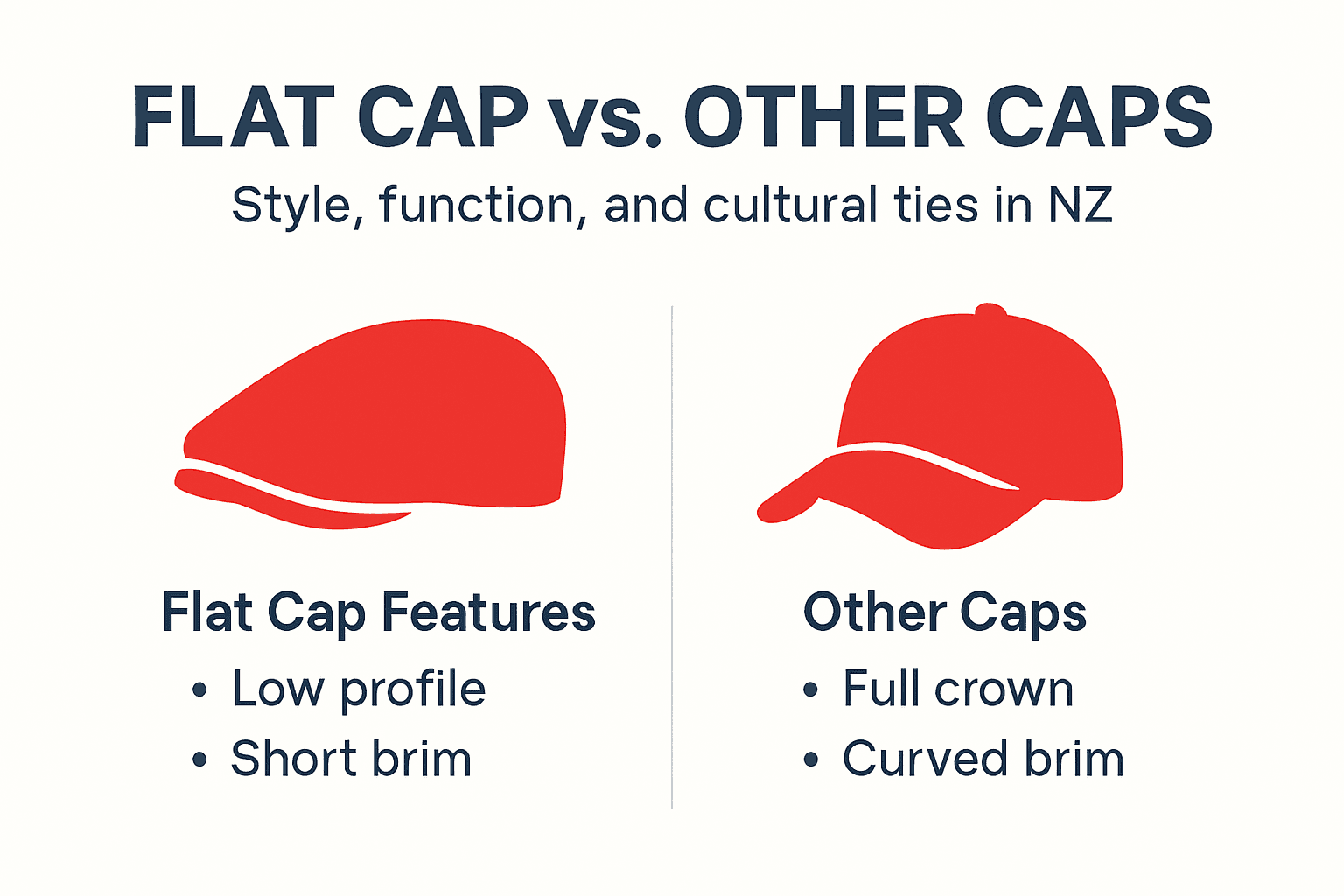
Comparing flat caps to other hats helps you avoid common purchasing mistakes. Many buyers confuse flat caps with newsboy caps due to similar brim shapes, but the crown volume differs significantly. Baseball caps lack the heritage craftsmanship and weather resistance that define premium flat caps.
Common misconceptions to avoid:
- Assuming all rounded caps with brims are flat caps (newsboy caps have distinct fuller crowns)
- Believing flat caps only suit formal occasions (they excel in smart-casual and outdoor settings)
- Thinking baseball caps offer equivalent weather protection (they lack wool’s natural moisture resistance)
- Expecting flat caps to fit like baseball caps (flat caps require proper crown sizing, not strap adjustments)
Your choice depends on intended use. For New Zealand’s variable weather and desire for versatile style, flat caps outperform alternatives. If you prefer vintage flair with more volume, newsboy caps work well. Baseball caps remain ideal for sports and ultra-casual contexts but lack the sophistication and durability of heritage headwear.
Common misconceptions about flat caps
Myth 1: Flat caps are only for older men and outdated. Fact: 45% of flat cap buyers aged 18-35 embrace this headwear for its blend of heritage style and modern versatility. Younger New Zealanders pair flat caps with contemporary outfits, proving the design transcends age stereotypes. Fashion-forward individuals appreciate quality craftsmanship and timeless aesthetics over fleeting trends.
Myth 2: Flat caps and newsboy caps are identical. Fact: Flat caps feature single or two-panel crowns with streamlined profiles, while newsboy caps have eight-panel crowns creating fuller, rounded shapes. The construction differences affect fit, style, and formality. Confusing these styles leads to purchasing caps that don’t match your intended look or function.
Myth 3: Flat caps lack practicality or durability. Fact: Premium wool and tweed blends offer moisture-wicking properties and sun protection, reducing water soak-through by up to 60% compared to cotton caps. Quality construction ensures decades of use, making flat caps cost-effective investments. Their low profile and wind resistance outperform many modern alternatives in outdoor conditions.
Correcting misconceptions:
- Flat caps appeal to all ages, with significant growth among younger fashion enthusiasts
- Distinct crown panel counts and brim dimensions separate flat caps from newsboy styles
- Natural fibers provide superior weather protection and longevity over synthetic alternatives
- Modern flat cap fashion roles include urban streetwear, outdoor gear, and smart-casual staples
- Proper care maintains flat cap appearance and function for 20+ years
These myths persist because people associate flat caps with historical images rather than contemporary use. Marketing often overlooks younger demographics, reinforcing outdated perceptions. Yet New Zealand’s fashion landscape shows flat caps thriving across diverse age groups, climates, and style preferences. Recognizing these facts empowers you to choose headwear based on quality and suitability rather than misconceptions.
Styling and practical use: how to wear a flat cap in New Zealand
Flat caps pair well with casual and smart-casual outfits, offering versatility for diverse occasions. Combine your flat cap with jeans and a casual jacket for weekend errands, or elevate the look with chinos and a smart trench coat for evening events. The key lies in balancing traditional heritage aesthetics with contemporary elements that reflect your personal style.
Choose colors and materials suited for your activities. Neutral tones like charcoal, navy, and olive integrate seamlessly into most wardrobes, while rich tweeds in brown or rust add visual interest. Wool blends excel for outdoor durability, maintaining comfort during tramping, fishing, or coastal walks. Lighter cotton blends work for spring and summer, though they sacrifice some weather protection.
Fitting your flat cap properly ensures comfort and lasting shape. The crown should sit snugly without pinching, resting just above your eyebrows. Adjust the interior sweatband if available, or choose caps with elastic bands for customizable fit. A properly fitted cap won’t shift during movement, crucial for active outdoor use. Learning how to wear flat caps in NZ helps you maximize their style and function.
Styling tips for different contexts:
- Day to day wear: Pair with casual button-down shirts, jeans, and leather boots for effortless style
- Outdoor activities: Choose darker wool tweeds that hide dirt, pair with outdoor jackets and practical footwear
- Smart-casual occasions: Match with tailored trousers, blazers, and polished shoes for refined looks
- Seasonal adjustments: Lighter fabrics and colors for spring/summer, heavier wools for autumn/winter
- Color coordination: Match cap tones to your jacket or shoes for cohesive outfits
Avoid over-accessorizing. Flat caps make strong style statements on their own, so keep other accessories minimal. A simple watch and quality outerwear complement the cap without competing for attention. For maintaining your cap, brush off dirt regularly, spot clean stains promptly, and store it in a cool, dry place away from direct sunlight to preserve fabric integrity and color vibrancy.
Explore quality flat caps at Urban Caps
Now that you understand what makes flat caps exceptional, discover premium options crafted specifically for New Zealand’s climate and lifestyle. Urban Caps offers collections featuring natural fibers and heritage tweeds designed for durability, comfort, and timeless style. Each cap combines traditional craftsmanship with modern design sensibilities, ensuring you get headwear that performs as beautifully as it looks.

Whether you seek everyday casual wear or refined smart-casual pieces, our curated selections provide options for every occasion. Explore the heritage and style of flat caps through detailed guides that help you make confident purchasing decisions. With fast New Zealand delivery and local support, you’ll enjoy premium headwear without the wait or uncertainty of international shipping. Visit Urban Caps today to find your perfect flat cap.
Frequently asked questions about flat caps
What is the difference between a flat cap and a newsboy cap?
Flat caps feature single or two-panel crowns with streamlined, low profiles and small stiff brims. Newsboy caps have eight-panel crowns creating fuller, rounded shapes with a button on top and slightly larger brims. The crown construction affects overall volume, style formality, and how each cap sits on your head.
Are flat caps suitable for rainy weather in New Zealand?
Yes, premium flat caps made from wool or tweed blends offer natural water resistance, reducing moisture soak-through by up to 60% compared to cotton alternatives. While not fully waterproof, they handle light rain and coastal spray effectively. For heavy downpours, consider pairing your flat cap with a waterproof jacket hood for added protection.
Can younger people wear flat caps stylishly?
Absolutely. 45% of flat cap buyers in New Zealand are aged 18-35, demonstrating strong appeal among younger fashion enthusiasts. Pair your flat cap with contemporary outfits like slim jeans, casual jackets, and modern footwear to create looks that blend heritage craftsmanship with current style trends.
How do I care for and maintain a premium flat cap?
Brush off dirt regularly with a soft-bristled brush, spot clean stains using mild soap and cool water, and avoid machine washing. Store your cap in a cool, dry place away from direct sunlight to prevent fading and fabric deterioration. For wool and tweed caps, occasional steaming refreshes the fabric and removes wrinkles without damaging fibers.
Where can I buy quality flat caps in New Zealand?
Urban Caps specializes in premium headwear crafted for New Zealand’s climate and lifestyle, offering diverse flat cap collections with fast local delivery. The website features detailed product descriptions, sizing guides, and customer reviews to help you choose caps that match your style and functional needs with confidence.